HCC data overview
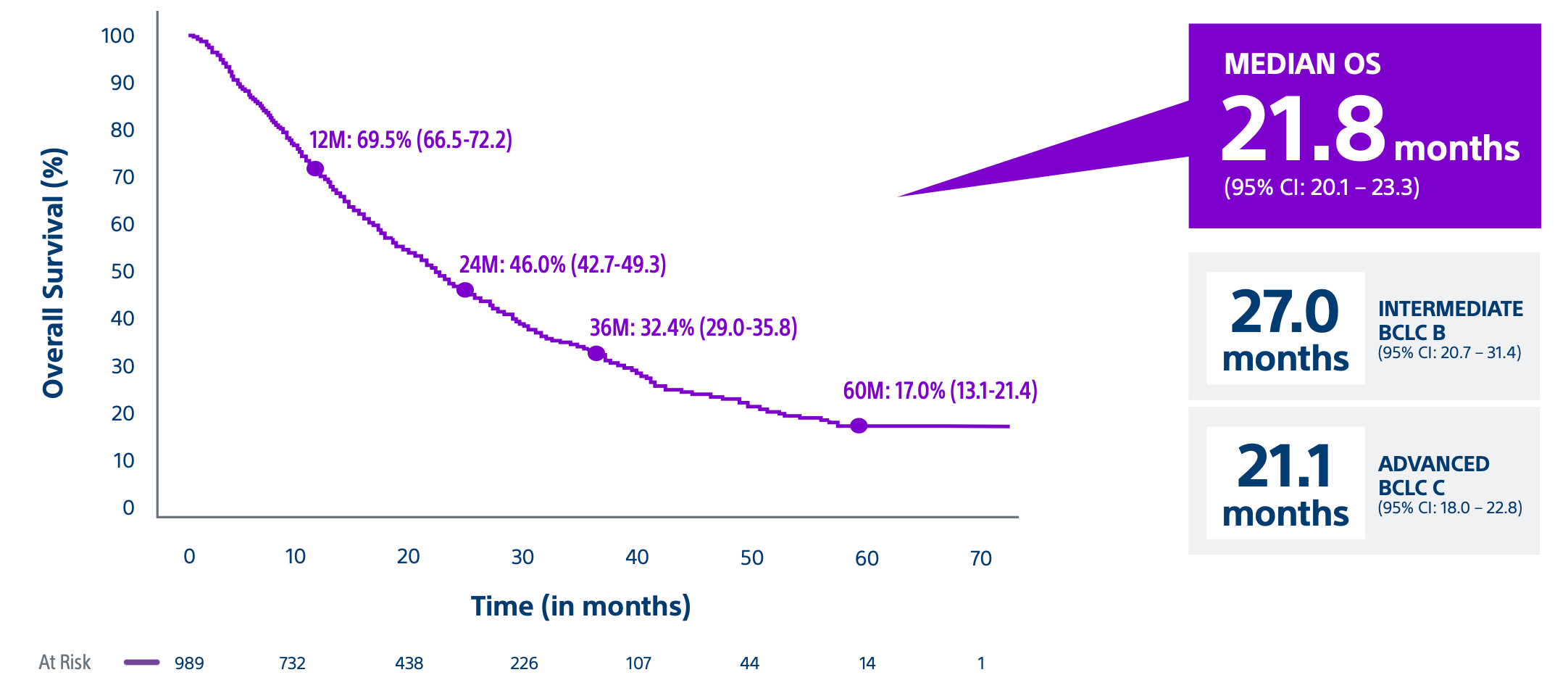
PROACTIF: The largest prospective, real-world Y-90 study with TheraSphere for the treatment of liver malignancies: Full analysis of 989 hepatocellular carcinoma (HCC) patients.
Boston Scientific accounts are for healthcare professionals only.
Create an account to access online training and education on EDUCARE, manage your customer profile, and connect with customer support and service teams.
My Boston Scientific account
Access your online applications and manage your customer profile.
Quick Links
Call customer care
PROACTIF: The largest prospective, real-world Y-90 study with TheraSphere for the treatment of liver malignancies: Full analysis of 989 hepatocellular carcinoma (HCC) patients.
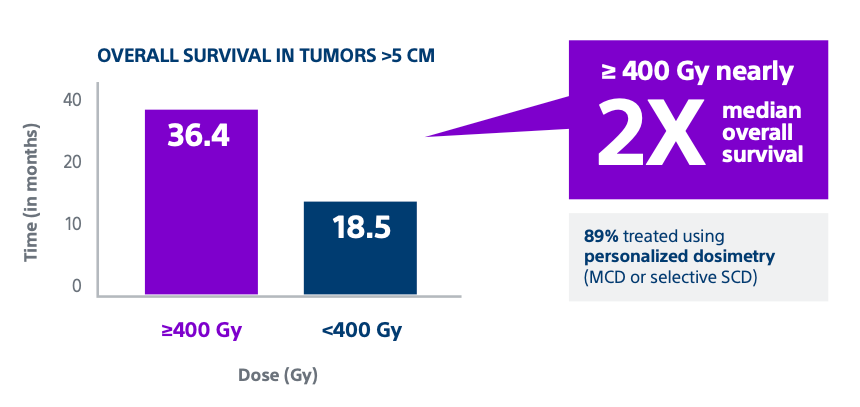
A ≥400 Gy tumor absorbed dose significantly improved survival in lesions >5 cm (n = 631)
(36.4 vs. 18.5 months; p<0.001), consistent with prior TheraSphere studies1
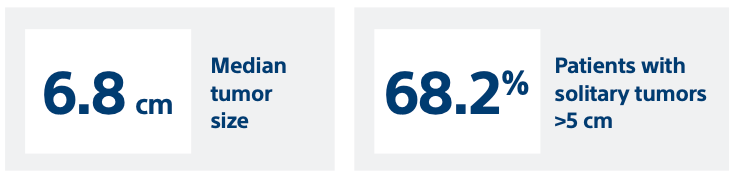
Median OS was 24.8 months in patients with localized PVT* (Vp1/Vp2; n=179) vs. 23.1 months in patients without PVT (n = 623) (p<0.001)
TheraSphere Y-90 preserved liver function, supporting eligibility for future treatments
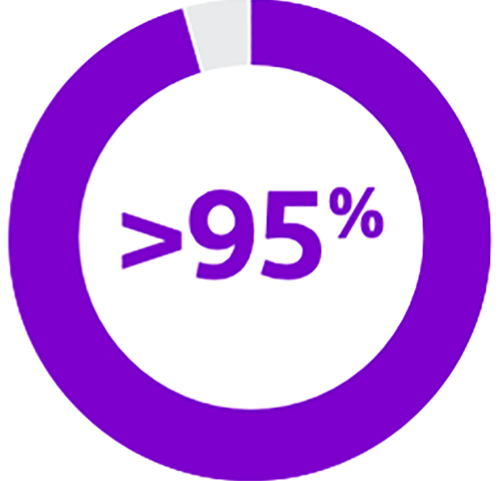
Preserved Hepatic Function
>95% of patients had no liver decompensation at 12 months (n = 243)
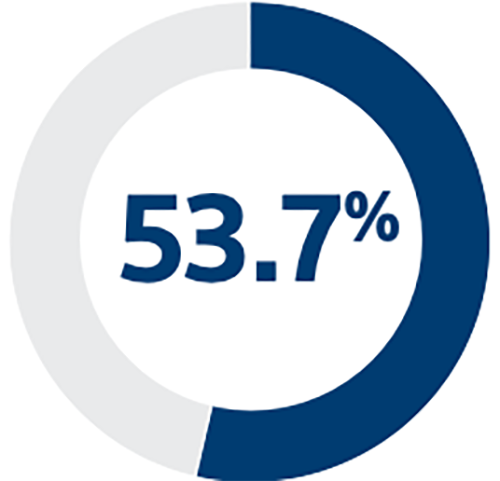
Subsequent Treatments
53.7% of patients received surgery, locoregional, or systemic therapy
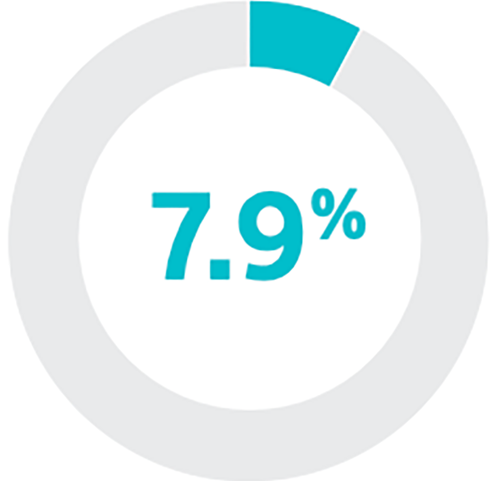
Low Adverse Event Rate
7.9% of patients had related grade ≥ 3 AEs
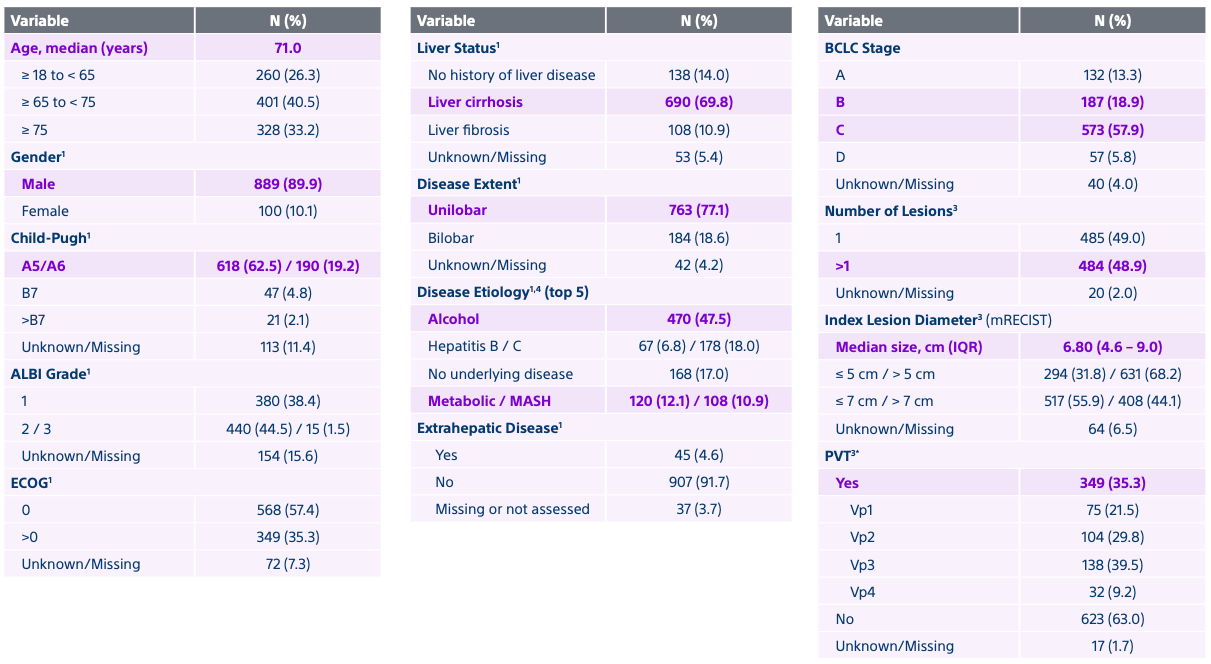
Abbreviations: ALBI, albumin-bilirubin; BCLC, Barcelona Clinic Liver Cancer; ECOG, Eastern Cooperative Oncology Group; IQR, interquartile range; MASH, metabolic dysfunction-associated steatohepatitis; mRECIST, modified Response Evaluation Criteria in Solid Tumors; PVT, portal vein thrombosis. 1. Assessment by investigator. 2. Programmatically derived using data entered by investigator. 3. Assessment by central review. 4. Patients may have had more than one.
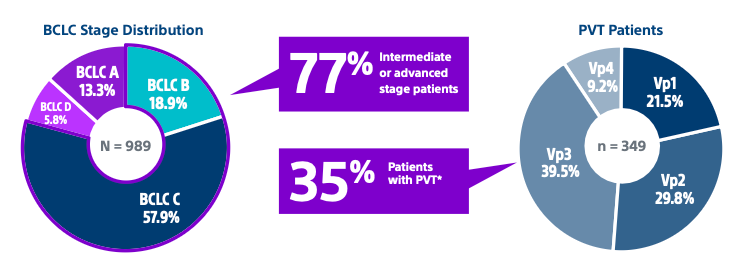
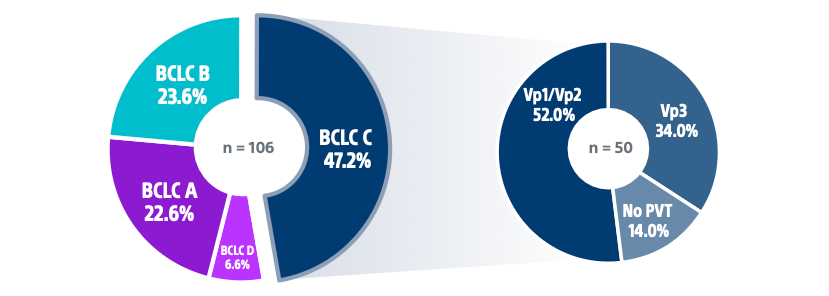
PROACTIF, the largest, prospective, real-world Y-90 study, demonstrated favorable effectiveness and safety of TheraSphere Y-90 in HCC, with robust 5-year outcomes in an all-comers population. The study reflects clinical practice complexity, with 76.8% of patients presenting with intermediate or advanced disease, 35.3% with PVT, and a median tumor size of 6.8 cm.
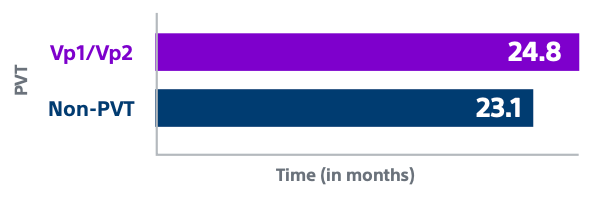
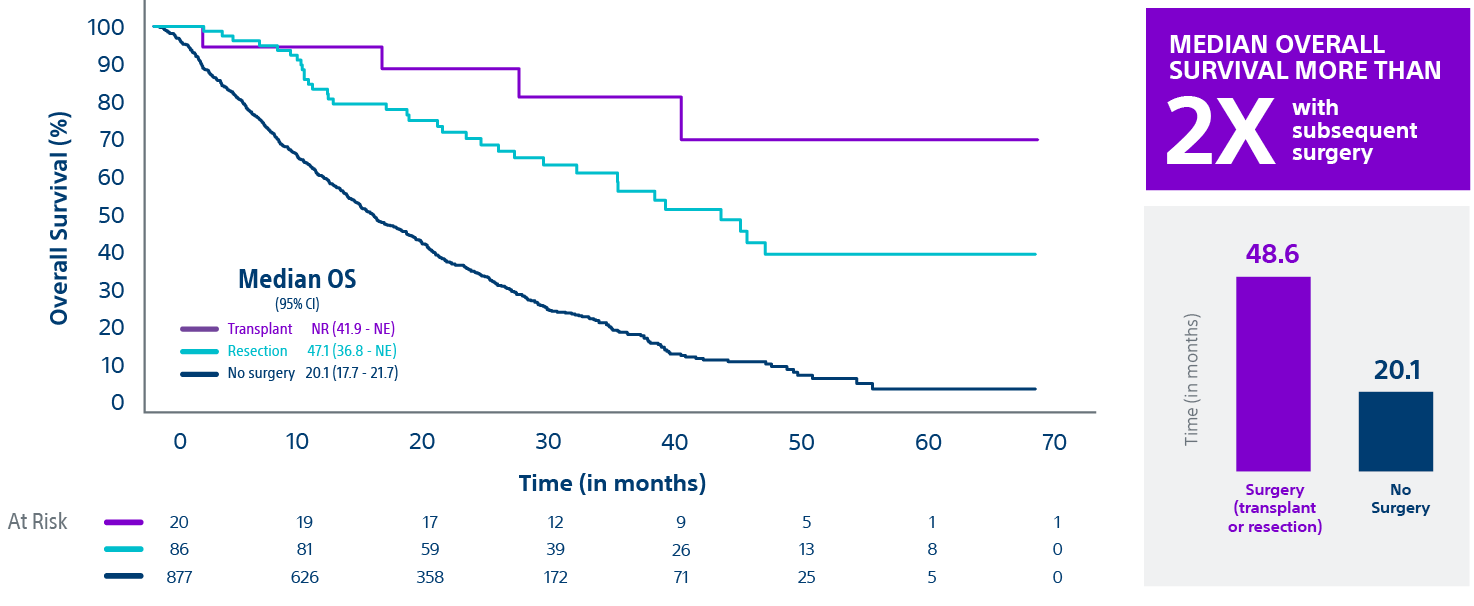
Outcomes were strongest in patients achieving higher absorbed doses (≥400 Gy) and in those downstaged to surgery, including PVT. These findings underscore the importance of patient selection and personalized dosimetry, and establish TheraSphere as the first and only Y-90 technology supported by this level of prospective real-world evidence.
*TheraSphere is not approved or intended for use outside of its current FDA-approved indication in the United States. Any discussion of off-label use is for scientific and educational purposes only.
Results from studies conducted using TheraSphere should not be assumed to apply to other products.
1. Lam, M., Garin, E., Maccauro, M. et al. A global evaluation of advanced dosimetry in transarterial radioembolization of hepatocellular carcinoma with Yttrium-90: the TARGET study. Eur J Nucl Med Mol Imaging 49, 3340 -3352 (2022). https://doi.org/10.1007/s00259-022-05774-0; Garin E, Tselikas L, Guiu B, et al. Personalised versus standard dosimetry approach of selective internal radiation therapy in patients with locally advanced hepatocellular carcinoma (DOSISPHERE-01): a randomized, multicentre, open-label phase 2 trial. Lancet Gastroenterol Hepatol 2021; Choi JW, Suh M, Choi Y, Lee M, Paeng JC, Kim HC. Yttrium-90 glass microsphere radioembolization as frontline treatment for hepatocellular carcinoma with localized portal vein invasion. Eur Radiol 2025.
Guiu B, Bailly C, Vibert E et al. Effectiveness and safety of selective internal radiation therapy using yttrium-90 glass microspheres for hepatocellular carcinoma: real-world results from the multi-center prospective PROACTIF cohort of 989 patients. eClinicalMedicine, 2026; 95.
TheraSphere is a registered trademark of Theragenics Corporation used under license by Boston Scientific Medical Device Limited, a wholly owned indirect subsidiary of Boston Scientific Corporation.