My account

Boston Scientific accounts are for healthcare professionals only.

Create an account to access online training and education on EDUCARE, manage your customer profile, and connect with customer support and service teams.

My Boston Scientific account

Access your online applications and manage your customer profile.

Quick Links

Call customer care

Social media

Social media is one of the most powerful tools you can use to educate current and prospective patients, increase awareness of your practice, and connect your community with options that can change lives. Whether you’re spotlighting reflux care, colorectal screenings, or endoscopic weight loss solutions, platforms like Facebook, Instagram, X (formerly Twitter), and TikTok can help you meet patients where they already are – online.

How to get started

Phone icon.

Pick your platform(s)

Choose one to two platforms based on where your patients are most active.

  • Facebook for local adults and caregivers
  • Instagram for younger adults and more visual storytelling
  • TikTok for short-form educational video content
  • LinkedIn and X (formerly Twitter) for news-style updates and thought leadership
Runner crossing finish line icon.

Set goals

Are you raising awareness of your practice? Educating your audience about certain procedures? Or looking to grow your referral base?

Calendar icon.

Build a content calendar

Plan two to three posts per week using a mix of formats: images, carousels, reels, or stories. Leverage social media management platforms to help build efficiencies and scale your social media activity without draining too much of your time. There are many options to pick from, whether you’re looking for a free or paid option.

Stars over person icon.

Use consistent branding

Use your logo, color palette, and tone of voice across all platforms for credibility and consistency. It’s also the best way to effectively build a trusted following of like-minded people who will engage and repost your content.

Best practices

Facebook icon.

Facebook

  • Post 2–4x/week
  • Use a mix of photos, blog links, and short videos
  • Engage in community groups and respond to comments
  • Great for: Clinic updates, patient testimonials, procedure spotlights
X (formerly Twitter) icon.

X (formerly Twitter)

  • Post 3–5x/week
  • Use threads to explain symptoms or procedures
  • Follow and engage with other health care professionals
  • Great for: Quick tips, thought leadership, awareness days
Instagram icon.

Instagram

  • Post 3x/week + regular stories
  • Use reels for short videos and carousels for tips
  • Hashtags and geo-tagging help new users find you
  • Great for: patient-focused content, behind-the-scenes, lifestyle content
TikTok icon.

TikTok

  • Post 2–3x/week
  • Use trending sounds and visual storytelling to educate
  • Keep it short, friendly, and informative
  • Great for: Patient education in plain language

Social media resources

Copy guidance

Crafting messages that educate and resonate

When writing copy for social media, the goal is to sound approachable yet knowledgeable. Think of your caption as a conversation starter with someone who may be nervous, curious, or uninformed about their health. Here are key tips:

  • Keep it conversational: Write like you speak – clear, kind, and informative.
  • Use plain language: Avoid medical jargon when possible. Swap “gastroesophageal reflux” for “chronic heartburn.”
  • Lead with a hook: Start with a question or relatable problem to grab attention but try not to sound too gimmicky (e.g., “Tired of feeling bloated every day?”).
  • Add a call to action (CTA): Prompt readers to do something – “Learn more,” “Talk to your doctor,” or “Watch our video.”
  • Use hashtags strategically: Add 2–4 relevant hashtags (#GutHealth #GIdoctor #WeightLossJourney #ColonoscopyAwareness) to increase discoverability.

Couple cooking together in a kitchen.

Image guidance

Choosing visuals that capture attention and build trust

Social media is visual first – your image or video is what stops the scroll – so investing in good imagery is important. However, it doesn’t have to be perfect. Your content should look authentic yet professional.

Use visuals that are:

  • Bright and clear: Avoid dark or cluttered backgrounds.
  • Relatable: Show real people, lifestyle imagery (e.g., healthy meals, walking, smiling patients), or your care team.
  • Educational: Use simple infographics or animations to explain concepts like endoscopic sleeve gastroplasty (ESG), colonoscopy prep, or reflux triggers.
  • Branded consistently: Use your logo and colors subtly to maintain visual continuity and credibility.
  • HIPAA-compliant: Never post patient images or information without written consent.
Lightbulb icon.

Pro tip

Photos of YOU and your team perform better than stock photos. Patients want to see who they are trusting with their care.

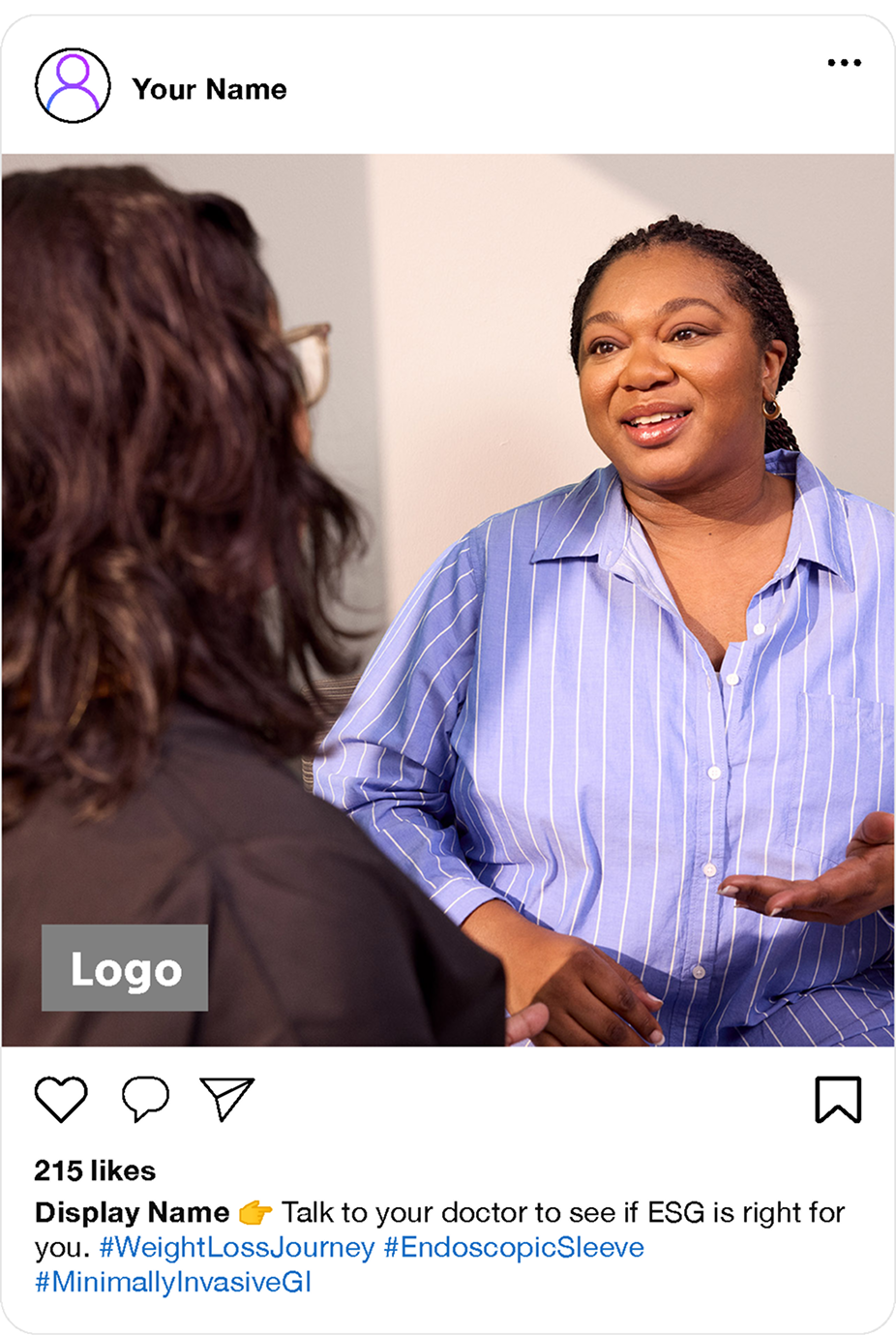
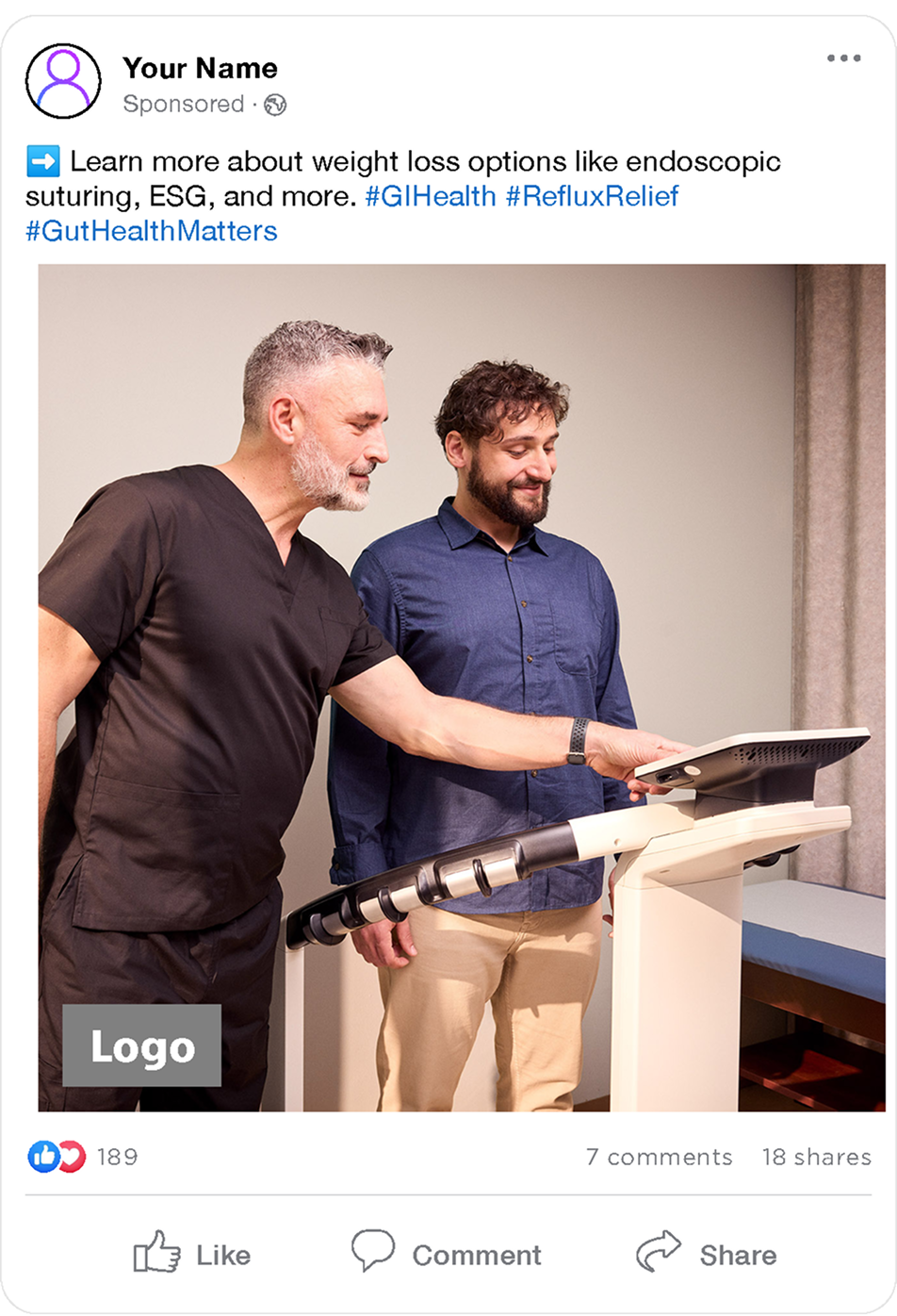
Example social posts
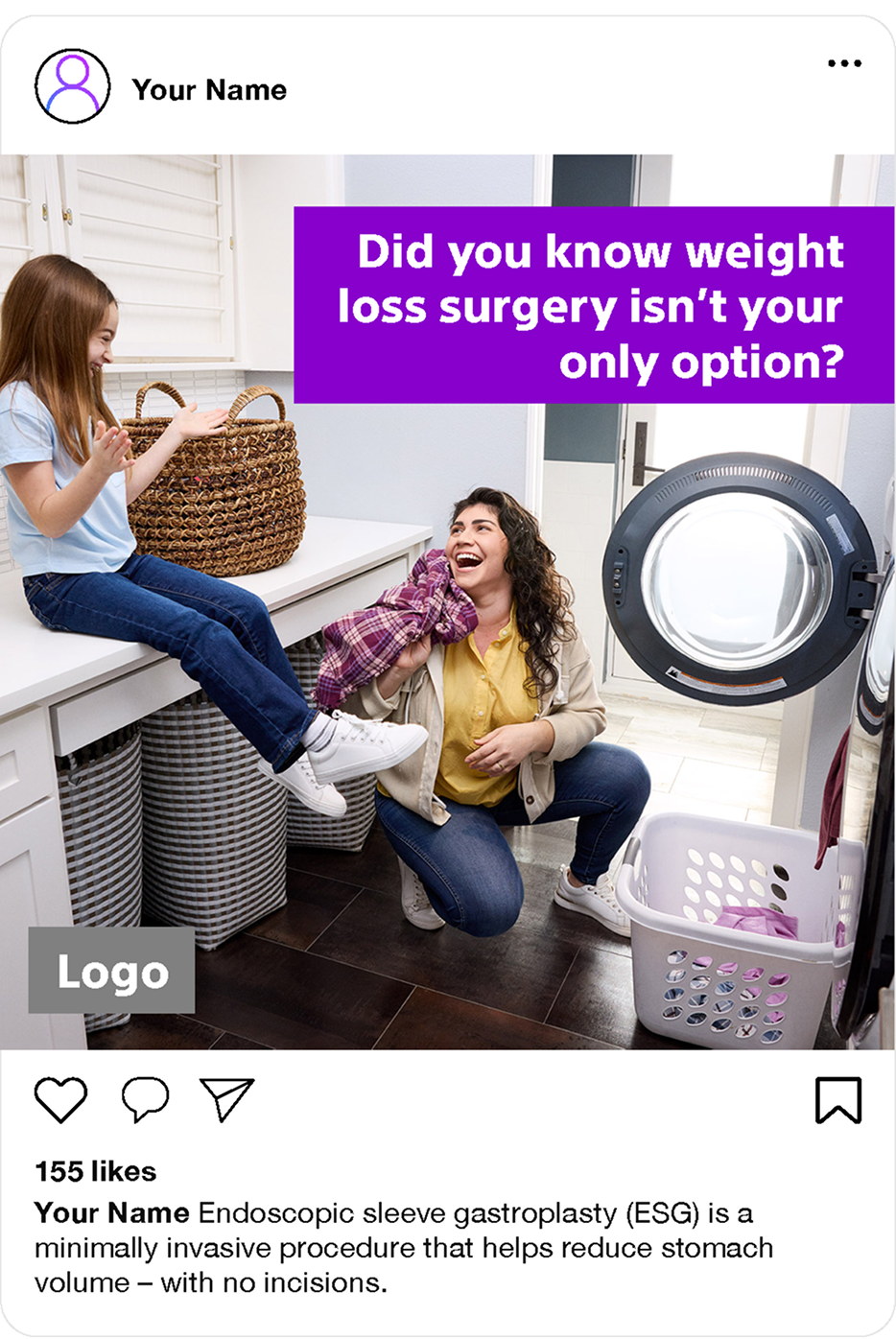
Instagram

Sample social media post example.

Facebook

Sample social media post example.

What is it?

Paid social media marketing refers to using budget to boost your posts or run targeted ads on platforms like Facebook, LinkedIn, Instagram, and TikTok. Unlike organic posts that reach only people who follow you, paid posts are shown to custom audiences based on demographics, interests, or location – so you can reach more potential patients, faster.

It’s especially effective for:

  • Educating on new services like ESG or intragastric balloons
  • Driving traffic to your website or consultation page
  • Raising awareness about common but often ignored symptoms (like chronic reflux or bloating)
  • Paid campaigns allow you to reach patients who may not know these options exist – and help them take the next step.

How to execute

Launching a paid campaign is easier than it sounds. You don’t need a marketing agency or big budget to get started.

Phone icon.

Choose your platform

Start with Facebook and Instagram (they use the same ad manager and have strong health care targeting options).

Customer support icon.

Define your audience

Target by:

  • Location (ZIP codes near your practice)
  • Age and gender (e.g., 30–65+, female for weight loss campaigns)
  • Interests (e.g., weight loss, acid reflux, bariatric surgery, wellness)
Paid search budget icon.

Set your budget

Begin with $200–$500/month. Even $10/day can yield strong local awareness.

List update icon.

Create your ad

Use:

  • A compelling image or short video
  • Clear, reassuring messaging (e.g., “Tired of reflux? There’s a minimally invasive solution.”)
  • A strong call to action (e.g., “Learn more” or “Book a consultation”)
Computer dashboard icon.

Launch and monitor

Use Meta Ads Manager (or boost directly in app) to set your schedule, audience, and creative – then go live.

How to measure

The value of paid social media comes from trackable results. Here’s what to watch:

MetricWhat it meansWhy it matters
ImpressionsHow many times your ad was seenMeasures reach and brand visibility
Click-through rate (CTR)% of viewers who clicked your linkIndicates ad effectiveness
Cost per click (CPC)How much you’re paying for each clickHelps optimize your budget
ConversionsActions taken (e.g., form filled, call made)Shows return on investment (ROI) and lead generation
EngagementLikes, shares, commentsSignals resonance with your message
Lightbulb icon.

Pro tip

Use your website or scheduling platform to track how many patients came from your ads. Ask new patients how they heard about you – many will mention, “I saw you on Instagram.”

Paid social media marketing helps you reach the right patients with the right message at the right time – and gives you the data to keep improving.