
Get news on conferences, trials, symposium invites, and more. Sign up for updates
Skip to main content

My account

Boston Scientific accounts are for healthcare professionals only.

Create an account to access online training and education on EDUCARE, manage your customer profile, and connect with customer support and service teams.

My Boston Scientific account

Access your online applications and manage your customer profile.

Quick Links

Call customer care

Dark area showing tumor against blue background.

TheraSphere™ Y-90 Glass Microspheres

Transplant candidacy

Help get your HCC patients to transplant

TheraSphere™ Y-90 Glass Microspheres is the market leader and first FDA approved transarterial radiation therapy for hepatocellular carcinoma (HCC), delivering targeted damage to the tumor, sparing healthy tissue, and preserving treatment options.

TheraSphere is an efficient and powerful therapy for HCC that safely delivers high-dose radiation which can:

  • Aid in achieving surgical candidacy
  • Preserve liver transplant eligibility
  • Support strong Overall Survival (OS) outcomes

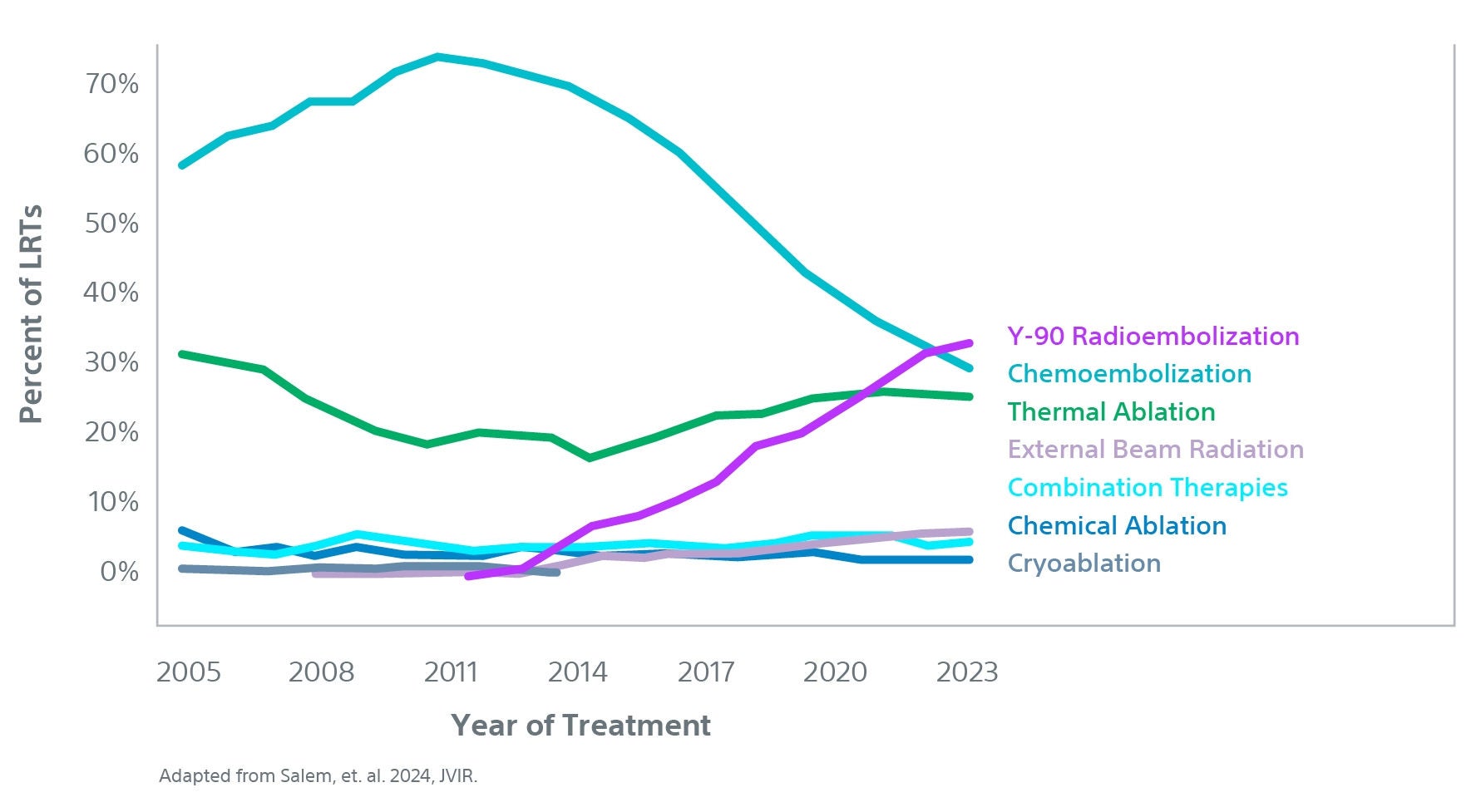
Y-90 is the most utilized LRT bridging strategy for liver transplant candidates with HCC in the US¹
TheraSphere OPTN data chart.

Analysis of data from the Organ Procurement and Transplant Network (OPTN) reflects the increasing adoption by many transplant centers of transarterial radioembolization (TARE) as the primary LRT option surpassing both chemoembolization and thermal ablation.¹

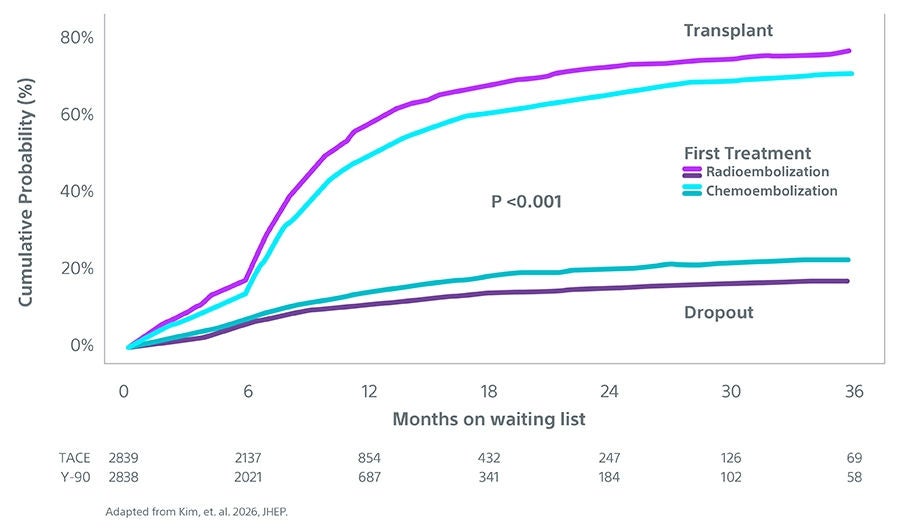
Y-90 patients are more likely to maintain transplant eligibility
transplant chart.

A study of 5,677 liver transplant patients (UNOS OPTN data, May 2019 - October 2024) reveals a major advantage for those treated with Y-90.

Fewer treatments needed:

  • 80% of Y‑90 patients required only one LRT
  • Compared to 56% of TACE patients who required multiple treatments

More streamlined path to transplant:

  • Y‑90 reduced the need for repeat procedures²

Lower waitlist dropout risk:

  • Patients treated with Y‑90 experienced a 22% lower risk of waitlist dropout vs. TACE²

Y-90 as the leading bridge to transplant

Join Dr. Riad Salem, Dr. Parissa Tabrizian, and Dr. Neil Mehta as they discuss Y‑90 as the #1 locoregional therapy for bridging to transplant, examining real‑world adoption trends and underlying clinical rationale.

Bridging and Downstaging

TheraSphere provides a strong local tumor response and has been studied in patients intended to downstage tumors for transplant or bridge within Milan criteria.

82%

of patients bridged to transplant.3

74%

probability of successful downstaging with Y-90.4

74%

of HCC patients showed complete or extensive tumor necrosis.3

Y-90 vs. other LRTs

Explore clinical data for Y-90 vs. other locoregional therapy (LRT) options

map pin icon.

Treatment center finder

Instantly locate treatment centers administering TheraSphere near you for your HCC patients.

References

  1. Salem R, Kwong AJ, Kim N, Sze DY, Mehta N, YTTRIUM-90 RADIOEMBOLIZATION HAS BECOME THE MOST UTILIZED BRIDGING TREATMENT FOR LIVER TRANSPLANT CANDIDATES IN THE UNITED STATES, Journal of Vascular and Interventional Radiology (2024), doi: https://doi.org/10.1016/j.jvir.2024.10.034.
  2. Kim NG, Yao FY, Kwong AJ, Mehta N, Yttrium-90 radioembolization is associated with a lower risk of liver transplant waitlist dropout than chemoembolization in hepatocellular carcinoma, Journal of Hepatology, https://doi.org/10.1016/j.jhep.2026.01.008.
  3. Gabr, A., Kulik, L., Mouli, S., Riaz, A., Ali, R., Desai, K., Mora, R.A., Ganger, D., Maddur, H., Flamm, S., Boike, J., Moore, C., Thornburg, B., Alasadi, A., Baker, T., Borja-Cacho, D., Katariya, N., Ladner, D.P., Caicedo, J.C., Lewandowski, R.J. and Salem, R. (2020), Liver Transplantation Following Yttrium-90 Radioembolization: 15-year Experience in 207-Patient Cohort. Hepatology. Accepted Author Manuscript. doi:10.1002/hep.31318
  4. Xu E, Tabrizian P, Gutierrez J, et al. Downstaging of hepatocellular carcinoma before liver transplantation: Results from a national multicenter prospective cohort study. Hepatology. 2025;72.