Boston Scientific accounts are for healthcare professionals only.

A minimally invasive interventional option for select pain patients
Radiofrequency Ablation (RFA) is a minimally invasive procedure that may be used to manage certain chronic pain conditions in appropriately selected patients who have not responded adequately to conservative treatment.
Patients who may be evaluated
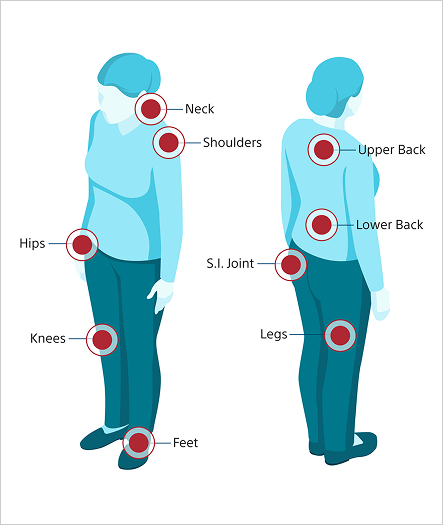
RFA may be considered for patients with chronic pain in the:
- Neck
- Shoulder
- Back
- Lower back
- Hip
- S.I. joint
- Leg
- Knee
- Foot
Patient evaluation and procedure selection are performed by an interventional pain specialist.
How RFA works
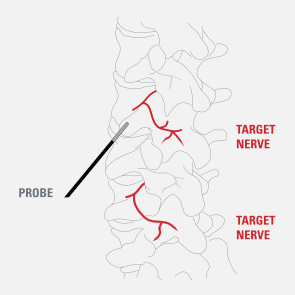
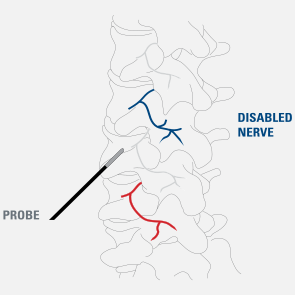
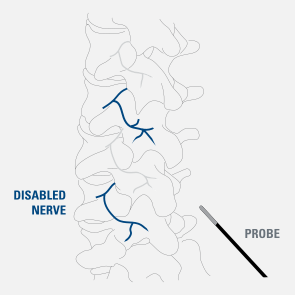
Using image guidance, radiofrequency energy is applied near targeted sensory nerves to disrupt pain signal transmission. Generally, from one to four nerves are targeted in one procedure.
RFA is typically performed on an outpatient basis and does not involve permanent implants.
After the procedure, patients may experience a few days of discomfort around the procedure site(s). Over the next few weeks, their pain should subside, allowing them to return to the activities they enjoyed before the onset of their chronic pain.
Clinical outcomes
Boston Scientific's proprietary SCS therapies deliver high clinical and functional success that is sustained for years, including:
Pain Relief:
88%
of patients reported a clinically significant reduction in pain using RFA.1
Patient Satisfaction:
>85%
of patients reported being satisfied with the improvement in their symptoms.2
Lasting Relief:
12 Months
Patients reported continued pain relief at 12 months post procedure.1
1. Provenzano DA, Holt B, Danko M, Atallah J, Iqbal M, Shah B, Singh A, Sachdeva H, Donck EV, Shaw E, Haas S, Sekhar R, Pan A, Halperin DS, Goldberg E. Assessment of real-world, prospective outcomes in patients treated with lumbar radiofrequency ablation for chronic pain (RAPID). Interv Pain Med. 2025 Apr 24;4(2):100576.
2. MacVicar J, Borowczyk JM, MacVicar AM, Loughnan BM, Bogduk N. Lumbar medial branch radiofrequency neurotomy in New Zealand. Pain Med. 2013;14(5):639-645. (N= 106)
View Boston Scientific Spinal Cord Stimulator System Indications, Safety, and Warnings
View Boston Scientific Radiofrequency Ablation Indications, Safety, and Warnings