Boston Scientific accounts are for healthcare professionals only.

Years of science, minutes to program2
Illumina 3D technology, exclusively from Boston Scientific, is the latest FDA-approved advancement in Image Guided Programming. Illumina 3D technology leverages intelligent algorithms to provide precise therapy with proven clinical outcomes.3 Visualize leads in the patient’s brain and apply stimulation to the optimal location.
Precise stimulation with proven outcomes3
Image Guided Programming, now featuring Illumina 3D technology, is backed by extensive clinical evidence.
Saves time
56%
Reduction in programming time4
20 minutes
Average programming time4
Improves outcomes
84%
of patients experienced lasting motor and quality of life improvements after being re-programmed using Image Guided Programming (n=31)1
88%
of patients selected the program generated by Illumina 3D programming compared with conventional programming (n=18)5
Remains stable over time
92%
Average stimulation field model overlap between initial programming and 1-year follow-up (n=18) with Image Guided Programming6
Easy and efficient Image Guided Programming
Enhance the precision of therapy delivery while reducing unintended stimulation to areas associated with side effects. Illumina 3D technology enables easy and efficient DBS programming by generating a patient-specific stimulation plan in 3 steps.
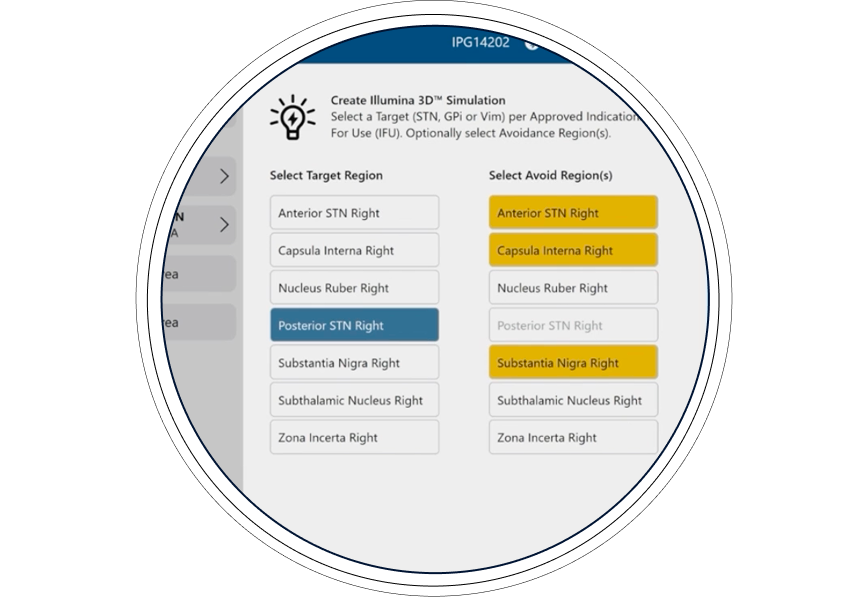
Select patient-specific target regions and avoidance region(s)
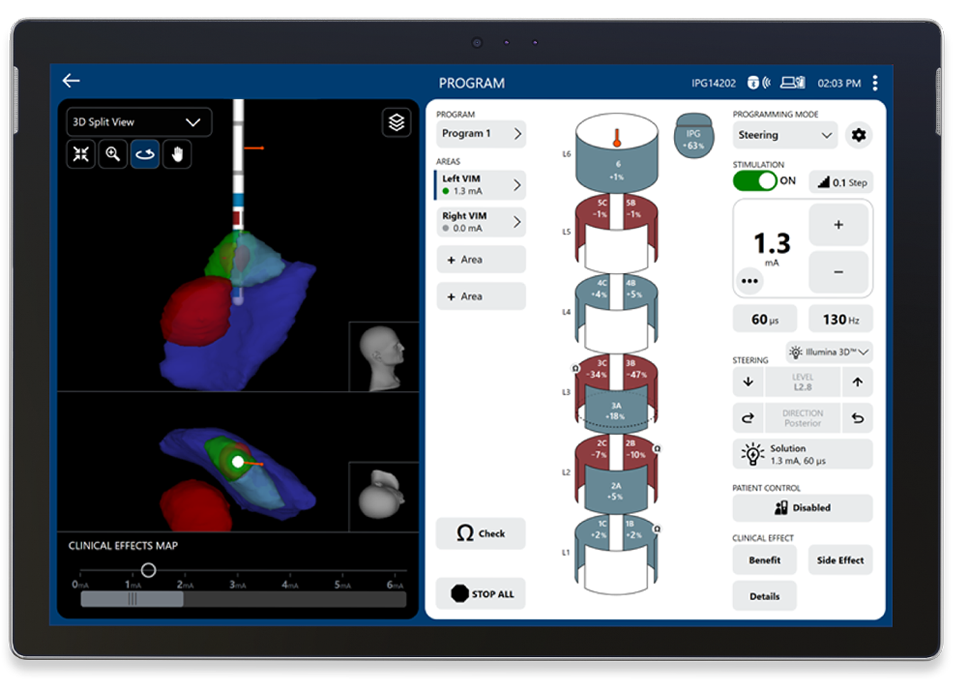
Algorithm generates a patient-specific stimulation plan
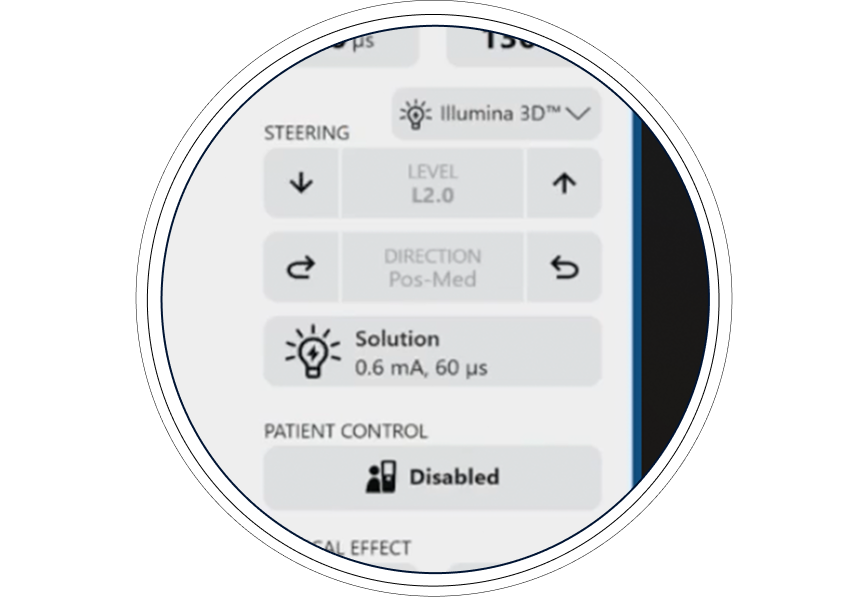
Illumina 3D steering enables quick adjustments of stimulation to optimize therapy
See Illumina 3D technology in action
Expert insights on Image Guided Programming
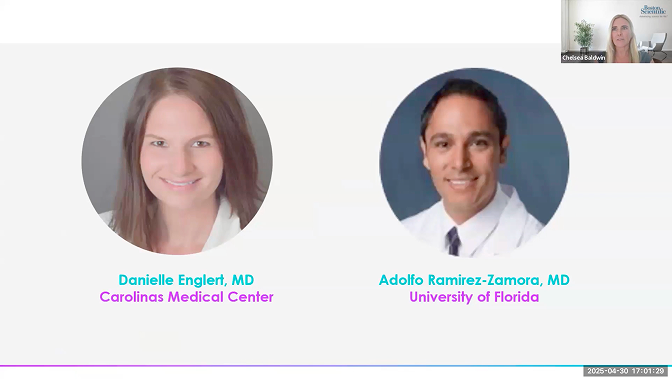
Hear clinical experience and case studies using Image Guided Programming with Illumina 3D technology. To watch the full webinar, register or sign in to EDUCARE.
Clinicians share their experience with Image Guided Programming and how it makes initial programming easier.
A DBS patient is programmed using Illumina 3D technology. With Illumina 3D technology, you can seamlessly access the system’s full capabilities—including expansive programmability across pulse width, rate, frequency, and polarity, as well as anodic stimulation, a feature unique to Boston Scientific.
Additional DBS resources


- Torres V, et al. Image-guided programming deep brain stimulation improves clinical outcomes in patients with Parkinson’s disease. NPJ Parkinsons Dis. 2024 Jan 27;10(1):29.
- Lange F, et al. Reduced Programming Time and Strong Symptom Control Even in Chronic Course Through Imaging-Based DBS Programming. Front Neurol. 2021 Nov 8;12:785529. N=10.
- Mahsa Malekmohammadi et al 2022 J. Neural Eng. 19 046014 DOI 10.1088/1741-2552/ac7e6c
- Image Guided programming in PD patients enables a reduction in programming time compared with standard clinical based programming (p=39). Lange F, Et al. Reduced Programming Time and Strong Symptom Control Even in Chronic Course Through Imaging-Based DBS Programming. Front Neurol. 2021 Nov 8;12:785529. N=10
- M. Ferris, J. Kim, B. Reid, V. Buch. Outcomes of Algorithm Guided DBS Programming: A case series [abstract]. Mov Disord. 2025; 40 (suppl 1). https://www.mdsabstracts.org/abstract/outcomes-of-algorithm-guided-dbs-programming-a-case-series/. Accessed October 28, 2025.
- Aldred et al. (2023). Image-Guided Programming Tool for DBS Programming Reduces Initial DBS Programming Time and Allows for Sustained Settings Long-Term. MDS 2023 Poster.
Caution: U.S. Federal law restricts this device to sale by or on the order of a physician.