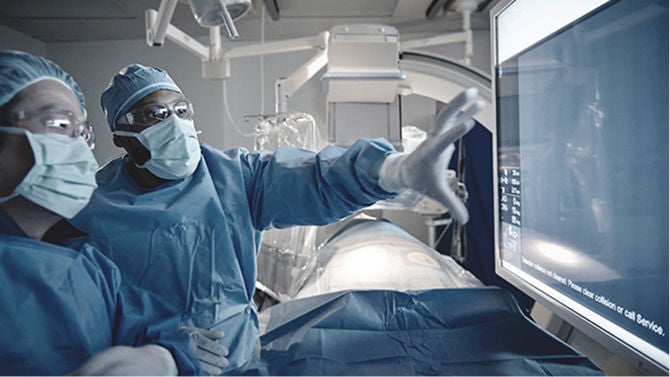











Reusable choledochoscopes typically require significant capital investment, time‑intensive reprocessing, and ongoing service commitments.
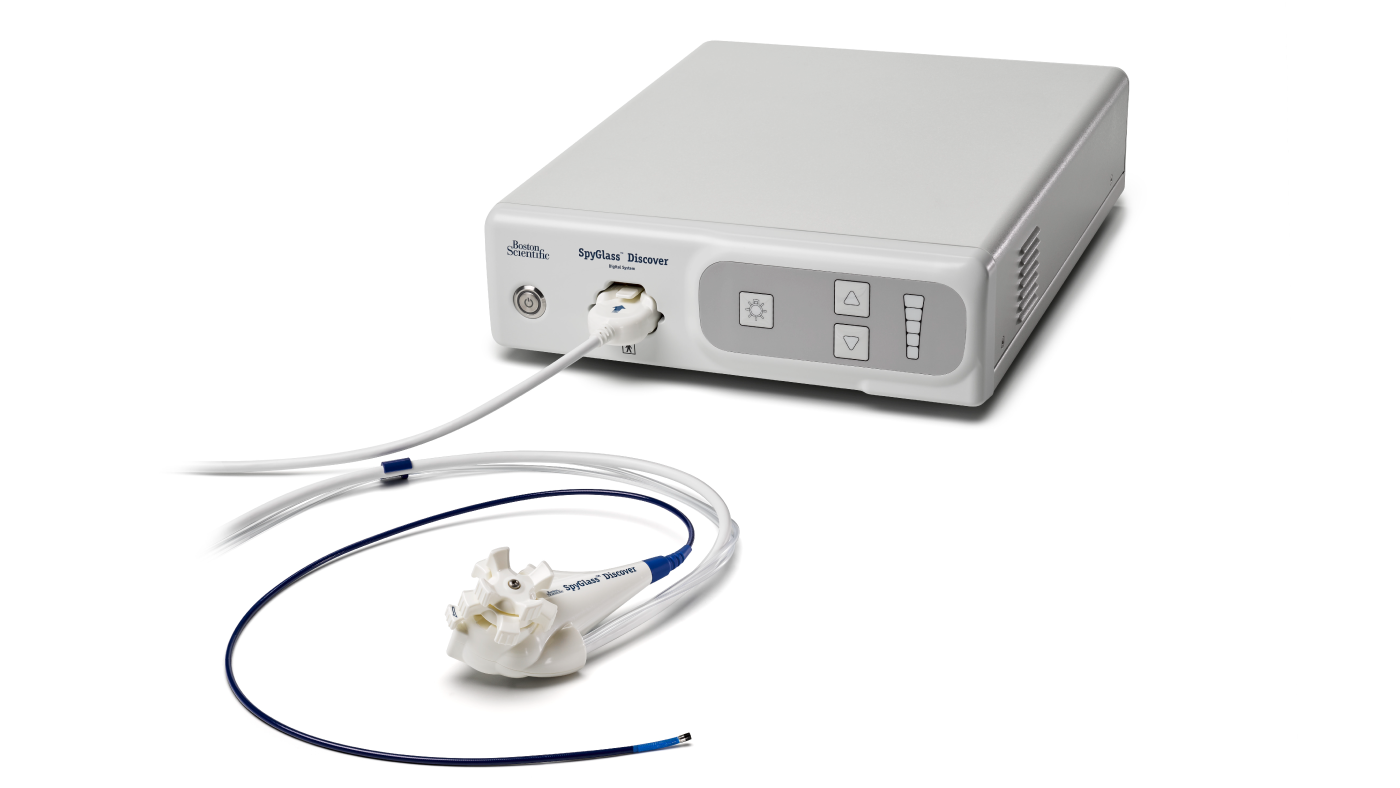
At Boston Scientific, we offer the single-use SpyGlass™ Discover Digital Catheter, enabling surgeons and interventional radiologists to begin every procedure with a sterile endoscope designed to deliver consistent, predictable performance. Eliminating the need for reprocessing and the associated risk of cross-contamination, the SpyGlass™ Discover Digital Catheter supports operationally efficient care.
Supporting Diagnostic and Therapeutic Pancreatobiliary Interventions
The SpyGlass™ Discover Digital Catheter is intended to provide direct visualisation and to guide both optical and accessory devices for diagnostic and therapeutic applications during endoscopic procedures in the pancreaticobiliary system, including the hepatic ducts.
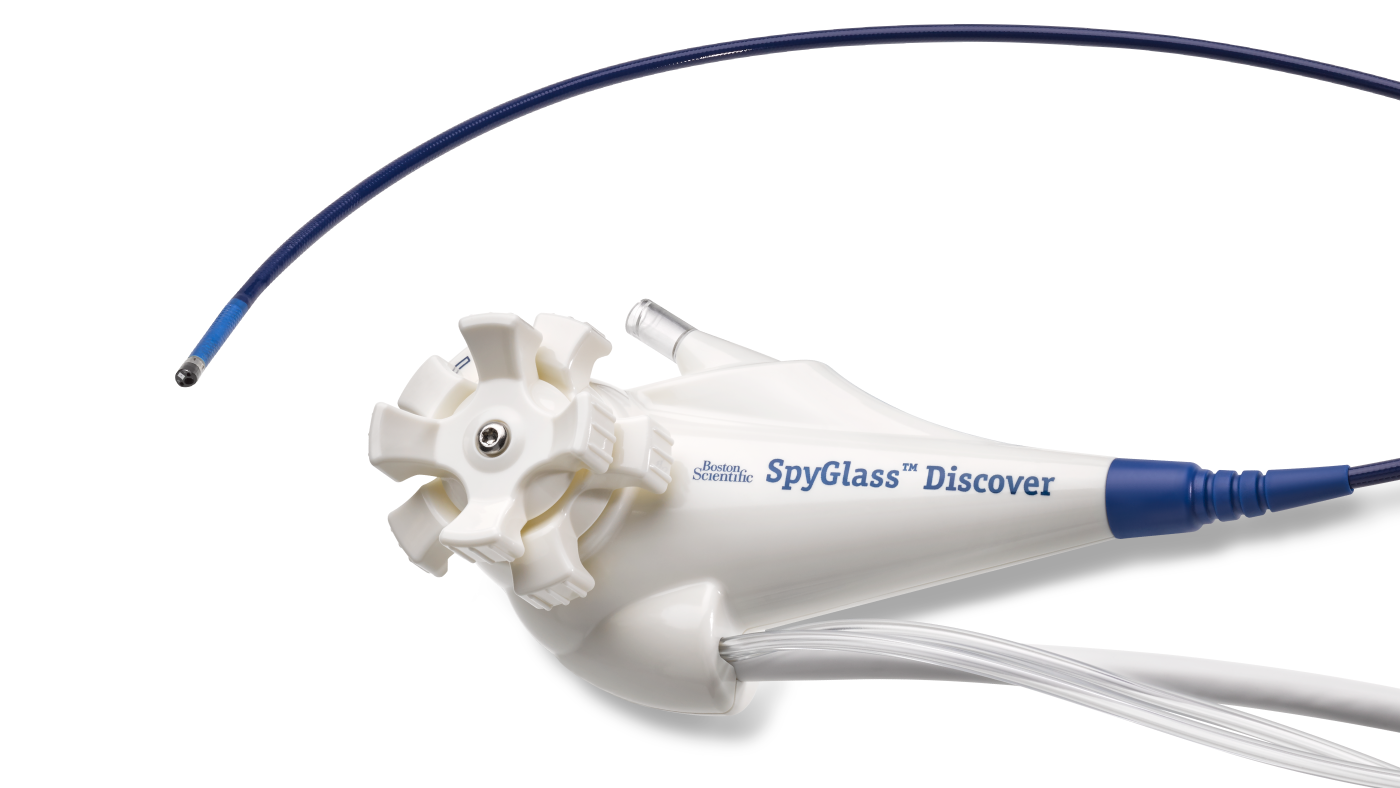
With it's ergonomic, lightweight handle, the SpyGlass Discover Digital Catheter features:
4-way
steering for navigation throughout the biliary system, dual light sources, and dual dedicated irrigation channels
3.6mm
insertion tube OD: 3.6mm/10.8 Fr. Insertion tube tip diameter: 3.5mm/10.5 Fr
1.2mm
working channel equipped for both diagnostic and therapeutic procedures
SpyGlass™ Discover is designed to enable reliable percutaneous access even in complex anatomy.
SpyGlass™ Discover for Surgical Access
In Europe, gallstone hospitalisation is one of the most common gastrointestinal diseases.1 Over 800,000 Europeans annually will undergo a laparoscopic cholecystectomy due to symptomatic gallstone disease,2 with around 4.6%- 12% of these patients also exhibiting common bile duct (CBD) stones at the time of cholecystectomy.3

SpyGlass™ Discover Digital Catheter is intended for use during laparoscopic common bile duct exploration (LCBDE). Laparoscopic common bile duct exploration (LCBDE) has been shown to be more effective in clearing CBD stones than when endoscopic retrograde cholangiopancreatography (ERCP) is performed either before or after laparoscopic cholecystectomy.4
SpyGlass™ Discover for Interventional Radiology
Managing bile duct stones or biliary obstruction can be particularly challenging when patients present with surgically altered hepato-pancreato-biliary (HPB) anatomy or when their health status limits available treatment options. These patients may have undergone a previous surgery such as a Roux-en-Y gastric bypass, pancreaticoduodenectomy (Whipple procedure), or liver transplant that resulted in altered HPB anatomy.5

For complex cases such as these, where traditional approaches are limited or not feasible, the SpyGlass™ Discover Digital Catheter can support percutaneous transhepatic cholangioscopy (PTCS) to offer an option for both stone disease and stricture management.