










Giving hospitals confidence in choosing an endoscopy partner aligned with their sustainability goals
We help reduce environmental impact through technologies that enable first-time clinical success, sustainable procurement, and efficient supply chain practises.
Our approach focuses on three pillars:


Advancing Minimally Invasive Care
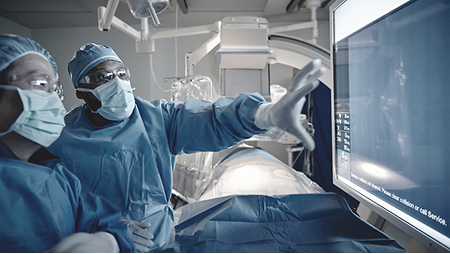
We invest in innovations that support first-time procedural success, reducing repeat interventions and demands on the healthcare system.
Compared with more invasive surgical techniques, procedures delivered endoscopically are associated with:
- Shorter hospital stays¹
- Faster recovery times¹
- Lower rates of complications¹
- Reduced energy, water, and waste linked to prolonged inpatient care²
Reducing unnecessary procedures can have the largest immediate carbon impact while maintaining patient outcomes.³
Supporting Sustainable Operations

We support environmental improvements within endoscopy services by working alongside hospitals to improve efficiency, transparency, and responsible procurement.
Practical operational models can help embed sustainability into everyday endoscopy service management. We can support you with:
- Vendor-managed inventory and payment-per-procedure solutions designed to improve efficiency and sustainability
- Collaboration on order management and shipment optimisation to increase supply chain transparency
- Incorporating environmentally responsible criteria into tender frameworks
We’re advancing sustainable endoscopy by:
- Collaborating with endoscopy societies and clinical leaders to develop practical, evidence-led solutions
- Working with healthcare professionals to advance scalable approaches to sustainable endoscopy
A Trusted, Environmentally Responsible Partner
Partnering with Boston Scientific means choosing a supplier that shares your environmental vision - supporting compliance, strengthening reputation, and enabling responsible growth across healthcare systems.
We are reducing our environmental footprint by improving logistics efficiency, working with suppliers to transition to renewable energy, and reducing packaging across our supply chain. Responsible waste management also plays a key role, with 75% of solid, non-hazardous waste from manufacturing and supply chain operations recycled.4a
Our C³ strategy, Cut, Convert, Compensate, guides our approach to reducing environmental impact while continuing to deliver high-quality medical technologies.
- Cut energy use and invest in energy efficiency
- Convert to renewable energy sources
- Compensate for remaining emissions through carbon credits and offset projects where necessary
Delivering measurable progress
Through the C³ strategy, we have achieved:


Progress towards Net Zero
Clear milestones have been established to reduce emissions across operations and the wider value chain:
1. Carbon-neutral operations by 2030 (Scopes 1 and 2)
2. Net-zero emissions across the full value chain by 2050 (Scopes 1, 2, and 3)