



Banner

Effective Complication Management with Endoluminal Vacuum Therapy


Anastomotic leaks (AL) are serious and potentially life-threatening complications following surgery. They are associated with increased morbidity and mortality, longer hospital stays, higher costs, and an increased risk of reoperation.1-13

Given this burden, early recognition and effective management are essential.

Endoluminal vacuum therapy (EVT) has emerged as an effective minimally invasive strategy to manage anastomotic leaks (AL) across both upper and lower GI tracts, with prevention in the upper GI specifically supported through the established indication of the Eso-SPONGE device.

Overview of Endoluminal Vacuum Therapy

EVT offers a minimally invasive approach for managing gastrointestinal leaks across the upper and lower GI tract, with established support for upper GI prevention via the Eso-SPONGE device. Based on Negative Pressure Wound Therapy, it employs an open-pore polyurethane sponge connected to a vacuum source that applies continuous negative pressure.

This mechanism contributes to:

  • Continuous drainage of secretions
  • Promotion of tissue perfusion
  • Stimulation of granulation tissue formation14

Closure success rates

86%

The Eso-SPONGE Registry reported a combined defect closure success rate of 86% for either anastomotic leakage or esophageal perforation15

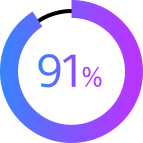
91%

Endo-SPONGE demonstrated a 91% closure success rate in a prospective study involving 281 patients with colorectal defects14

We are pioneering EVT solutions, empowering you with innovation, training, and clinical partnership. Together, we can improve patient outcomes while reducing the system-wide burden of anastomotic leakage.
Our Endoluminal Vacuum Therapy Portfolio

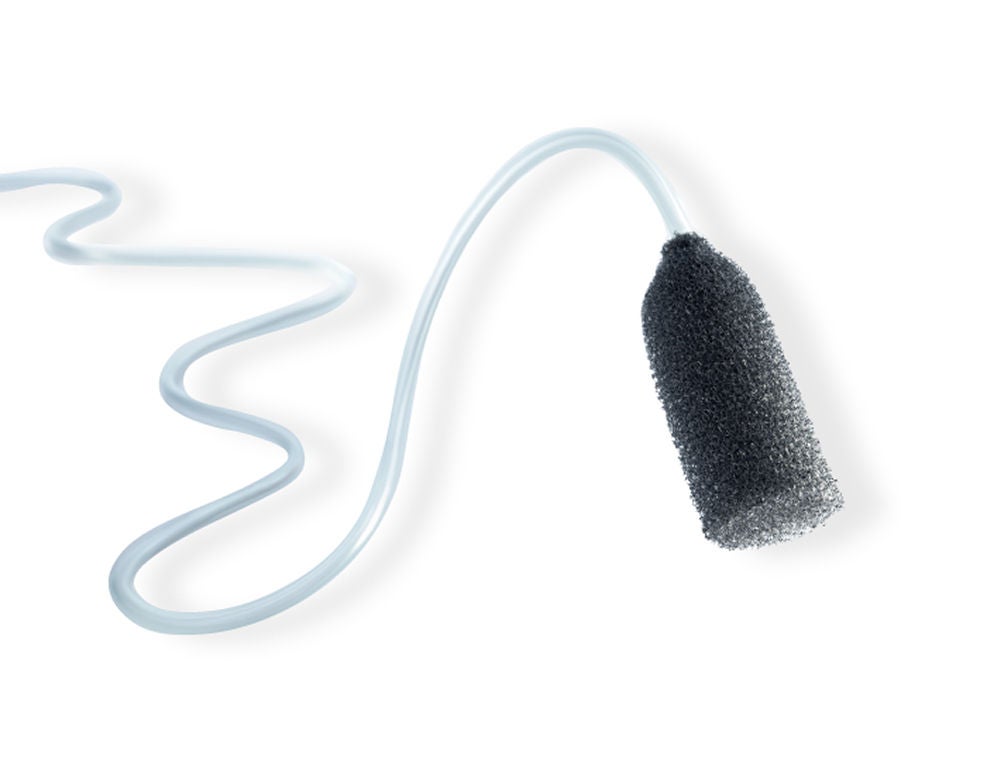
Eso-SPONGE™

Eso-SPONGE™

Designed for the management and prevention of upper gastrointestinal leaks and the treatment of perforations, Eso-SPONGE™ is supported by prospective multicentre registry data and clinical experience from expert esophageal centers.

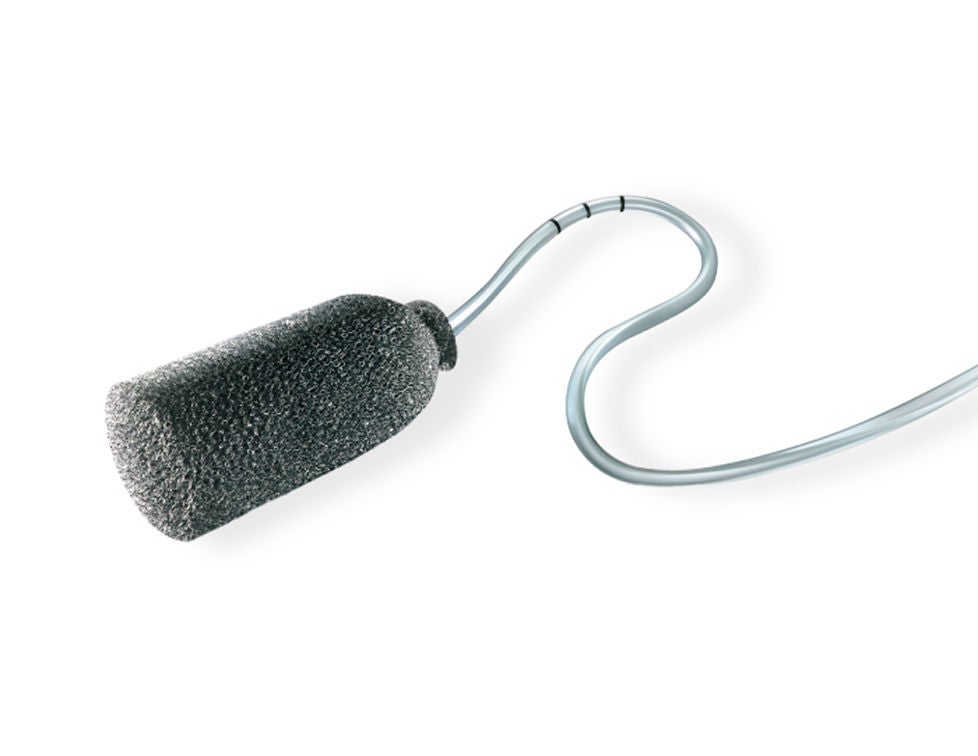
Endo-SPONGE™

Endo-SPONGE™

Endo-SPONGE targets colorectal anastomotic leaks, with observed trends toward reduced hospital stay and lower rates of permanent stoma formation potentially decreasing the overall cost of AL treatment. It also supports the feasibility of ambulatory care.14,16-23


Watch how the Eso-SPONGE™ works


One Partner. Multiple Solutions.

At Boston Scientific, we deliver services and solutions designed to support professional education, operational efficiency and environmental sustainability.


Connect with us:

Connect with our team to access the support, resources, and information you need to stay informed and make the most of our endoscopy solutions.

References

1. Capolupo GT, et al. Expert Rev Pharmacoecon Outcomes Res. 2022;22(4):691–7.

2. Wienholts K, et al. Colorectal Dis. 2024;26:1922–30.

3. Weber MC, et al. Langenbecks Arch Surg. 2023;408:55.

4. Ashraf SQ, et al. Colorectal Dis. 2013;15(4):e190–8.

5. La Regina D, et al. J Gastrointest Surg. 2019;23(3):580–6.

6. Goense L, et al. Eur J Surg Oncol. 2017;43(4):696–702.

7. Löfgren A, et al. Eur J Surg Oncol. 2021;47(5):1042–7.

8. Agzarian J, et al. J Thorac Cardiovasc Surg. 2019;157(5):2086–92.

9. Flor-Lorente B, et al. Health Econ Rev. 2023;13:12.

10. Fang AH, et al. J Clin Med. 2020;9(12):4061.

11. Shalaby M, et al. BJS Open. 2018;3(2):153–60.

12. Kähler G, et al. Visc Med. 2017;33(3):202–6.

13. Rutegård M, et al. Ann Surg Oncol. 2012;19(1):99–103.

14. Kühn F, et al. Surg Endosc. 2021;35(12):6687–95.

15. Richter F, et al. BJS Open. 2022;6(2):zrac030.

16. Jimenez-Rodriguez RM, et al. Surg Innov. 2018;25(4):350–6.

17. Milito G, et al. Surg Technol Int. 2017;10(30):125–30.

18. Shalaby M, et al. BJS Open. 2018;3(2):153–60.

19. Weidenhagen R, et al. Rozhl Chir. 2008;87(8):397–402.

20. Nerup N, et al. Dan Med J. 2013;60(4):A4604.

21. Arezzo A, et al. Dig Liver Dis. 2015;47(4):342–5.

22. Riss S, et al. Colorectal Dis. 2010;12(7):104–8.

23. Weidenhagen R, et al. Surg Endosc. 2008;22(8):1818–25.

CAUTION: The law restricts these devices to sale by or on the order of a physician. Indications, contraindications, warnings, and instructions for use can be found in the product labelling supplied with each device or at www.IFU-BSCI.com. Products shown for INFORMATION purposes only and may not be approved or for sale in certain countries. This material not intended for use in France. All images owned by Boston Scientific.