









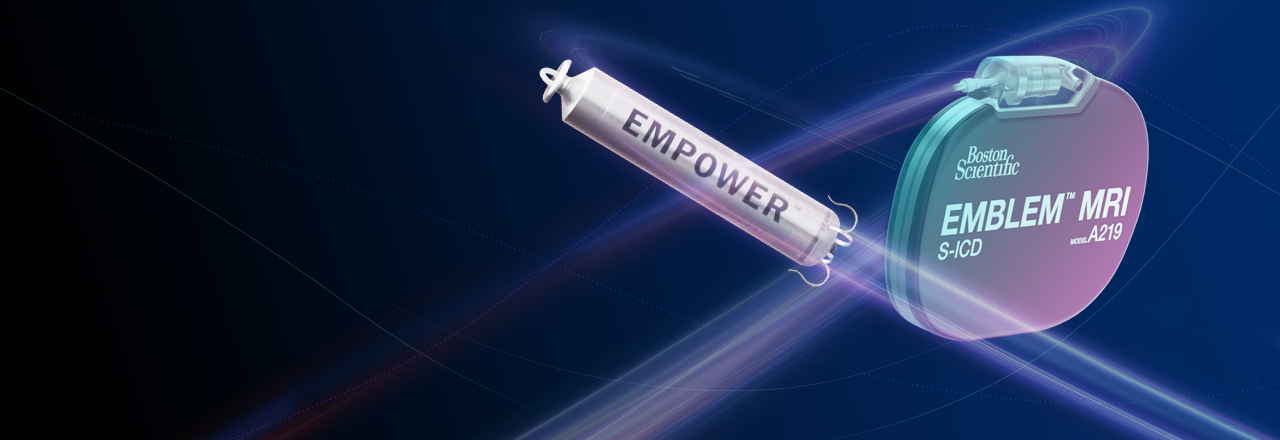
About the EMBLEM™
S-ICD System
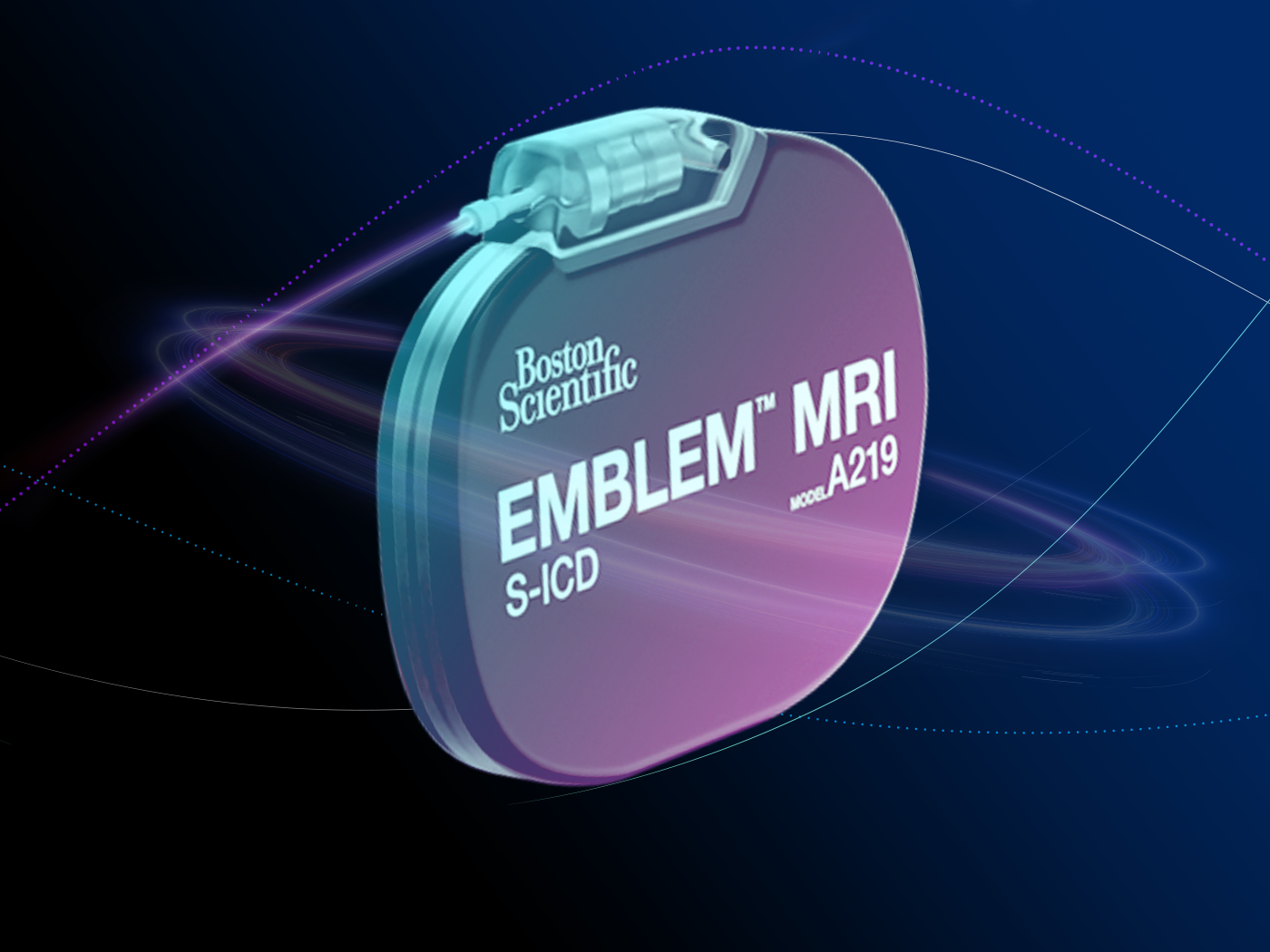
The EMBLEM™ Subcutaneous Implantable Cardioverter Defibrillator (S-ICD) is the only fully extrathoracic ICD system without leads placed in the vasculature or substernal area.1

For health care professionals in EUROPE except those practicing in France as the following pages are intended to all International health care professionals and are not in compliance with the French Advertising law N°2011-2012 dated 29th December 2011 article 34. Other health care professionals should select their country in the top right corner of the website.
Please note that the following pages are exclusively reserved for health care professionals in countries with applicable health authority product registrations. To the extent this site contains information, reference guides and databases intended for use by licensed medical professionals, such materials are not intended to offer professional medical advice. Prior to use, please consult device labeling for prescriptive information and operating instructions.
This Website is protected by the laws on copyright and by the relevant international conventions. It is strictly forbidden to make copies, whether partial or total and on whichever media without prior approval.
About the EMBLEM™
S-ICD System
The EMBLEM™ Subcutaneous Implantable Cardioverter Defibrillator (S-ICD) is the only fully extrathoracic ICD system without leads placed in the vasculature or substernal area.1

The EMBLEM™ S-ICD continuously monitors for life-threatening tachyarrhythmias and delivers a shock to restore normal heart rhythm.²

No transvenous or substernal leads, helping reduce the risk of lead-related infections and inappropriate shocks.³

Compatible with modular Cardiac Rhythm Management (mCRM™) technology, offering adaptability for future patient needs.²
References:
1.Burke MC, Aasbo JD, El-Chami MF, et al. 1-Year prospective evaluation of clinical outcomes and shocks: the subcutaneous ICD post approval study. JACC Clin Electrophysiol. 2020;6(12):1537–1550.
2.Boston Scientific. Data on file.
3.Knops RE, Olde Nordkamp L, Delnoy PP, et al. Subcutaneous or transvenous defibrillator therapy. N Engl J Med. 2020;383(6):526–536.
4.Essandoh, MK, Mark, GE, Aasbo, JD, et al., Anesthesia for subcutaneous implantable cardioverter-defibrillator implantation: Perspectives from the clinical experience of a U.S. panel of physicians. Pacing Clin Electrophysiol, 2018. 41:p.807–816.
5.Winter J, Clahsen H, Shin DI, et al. Submuscular is Superior to Subcutaneous Implantation for Subcutaneous Implantable Cardioverter Defibrillator. Circulation. 2013;128:A14688.
6.Ferrari P, Giofrè F, De Filippo P. Intermuscular pocket for subcutaneous implantable cardioverter defibrillator: single-centre experience. J Arrhythm. 2016;32(3):223–226.
7.Win Winter J, Siekiera M, Shin DI, et al. Intermuscular technique for implantation of the subcutaneous implantable cardioverter defibrillator: long-term performance and complications. Europace. 2017;19(12):2036–2041.
8.Droghetti A, Locatelli A, Casiraghi B, et al. Totally submuscular implantation of subcutaneous implantable cardioverter defibrillator: a safe and effective solution for obeseor oversized patients. Clinical Case Reports. 2016;4(10):1009–1011.
9.Kondo Y, Ueda M, Winter J, et al. Successful intermuscular implantation of subcutaneous implantable cardioverter defibrillator in a Japanese patient with pectus excavatum. J Arrhythm. 2017;33(1):63–65.
10.Migliore F, Allocca G, Calzolari V, et al. Intermuscular Two-Incision Technique for Subcutaneous Implantable Cardioverter Defibrillator Implantation: Results from a Multicenter Registry. Pacing Clin Electrophysiol. 2017;40(3):278–285.
11.Boston Scientific CRM Product Performance Report published December 4th, 2023 Data as of October 3rd, 2023.
12.Al-Khatib SM, Stevenson WG, Ackerman MJ, et al. 2017 AHA/ACC/HRS Guideline for management of patients with ventricular arrhythmias and the prevention of sudden cardiac death: executive summary: A report of the american college of cardiology/american heart association task force on clinical practice guidelines and the heart rhythm society. Heart Rhythm. 2018;15(10):e190–e252.
13.Priori SG, Blomström-Lundqvist C, Mazzanti A, et al. 2015 ESC Guidelines for the management of patients with ventricular arrhythmias and the prevention of sudden cardiac death: the task force for the management of patients with ventricular arrhythmias and the prevention of sudden cardiac death of the European Society of Cardiology (ESC). Endorsed by: Association for European Paediatric and Congenital Cardiology (AEPC). Eur Heart J. 2015;36(41):2793–2867.
ACC, American College of Cardiology; AHA, American Heart Association; CRM, cardiac rhythm management; ESC, European Society of Cardiology; HRC, Heart Rhythm Society; ICD, implantable cardioverter defibrillator; SCD, sudden cardiac death; S-ICD, subcutaneous ICD.
CAUTION: The law restricts these devices to sale by or on the order of a physician. Indications, contraindications, warnings, and instructions for use can be found in the product labelling supplied with each device. or at www.IFU-BSCI.com. Products shown for INFORMATION purposes only and may not be approved or for sale in certain countries. This material not intended for use in France.