The importance of precision in liver cancer care

THERASPHERETM Y-90 THERAPY

The Precision of TheraSphereTM in Liver Cancer Treatment

Understanding the Challenge: Large HCC tumours

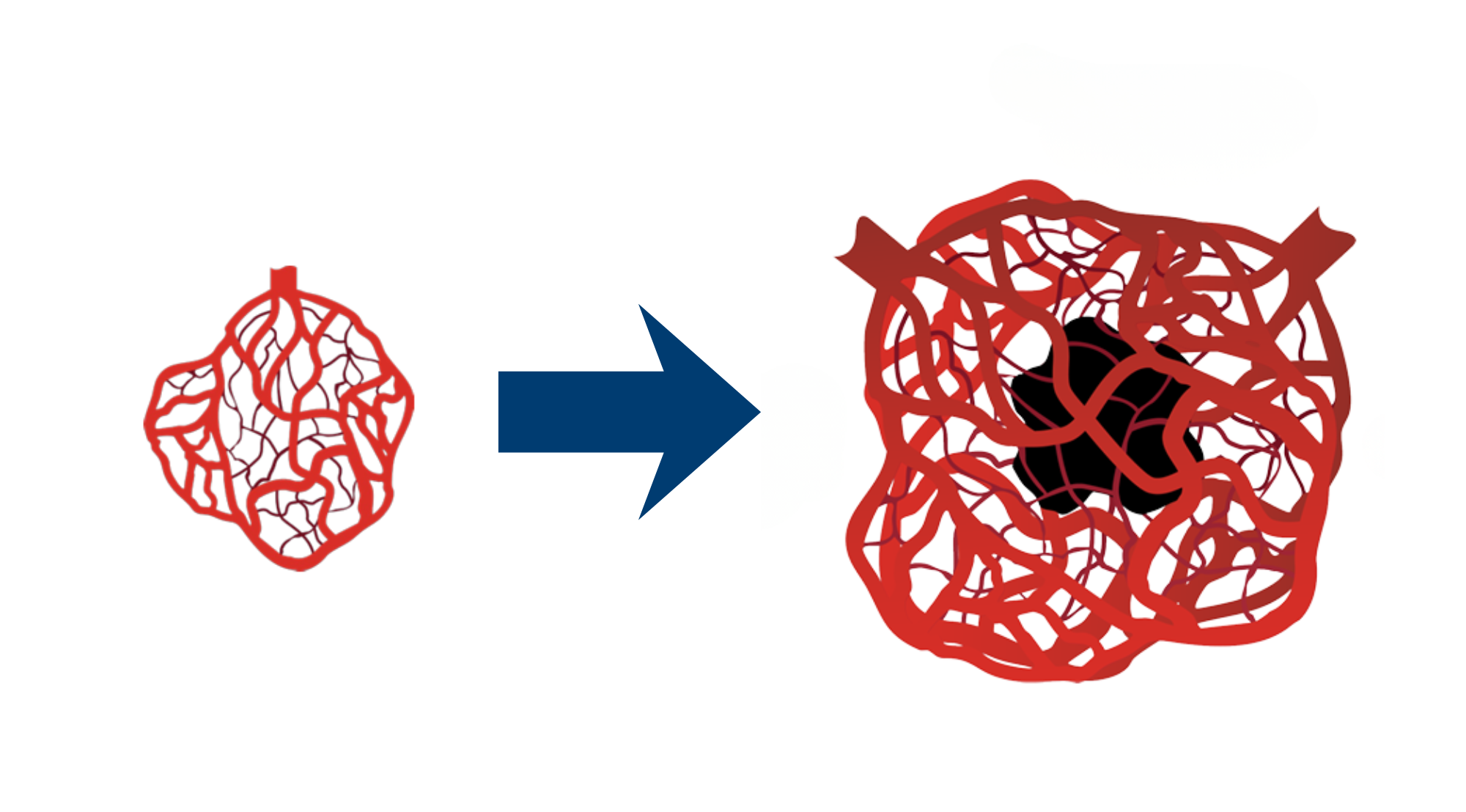
Large hepatocellular carcinoma (HCC) tumours present a unique and growing challenge in liver cancer care. As these tumours increase in size - from 5 cm to 8 cm and beyond - their internal structure becomes more complex, with a necrotic core, uneven pressure gradients, and multiple feeding blood vessels.


x4

increase in tumour size leads to…

x64

…increase in tumour volume and number of cancer cells

This complexity is more than just anatomical: a x4 increase in tumour diameter leads to a x64 increase in tumour volume and the number of cancer cells that must be destroyed.1-2

Treating large HCC tumours, therefore, requires therapies that can address both the scale and the intricacy of the disease.


Why does RPM matter in large tumours?

As tumour size increases, the number of tumour cells grows exponentially, furthermore the volume of healthy tissue diminishes, making precision in dose delivery even more essential.

Simply increasing the number of microspheres in treatment would risk exposing more healthy tissue to radiation, raising toxicity and potential complications. Instead, a higher Radiation Per Microsphere (RPM) is crucial: it allows for a more targeted, higher dose to the tumour while minimising the number of spheres required, thereby also sparing healthy liver tissue.

Large HCC tumours present complext internal structure, with a necrotic core and multiple feeding blood vessels.

Learn more about RPM and the Power of TheraSphere™ in Liver Cancer Care


TheraSphere™ Y-90 Therapy: Precision in Action

TheraSphereTM’s unique delivery allows for selective and lobar administration, adapting to the complexity of each patient’s tumour. TheraSphere™ Y-90 Therapy is designed to maximise the dose delivered to the tumour while minimising exposure to healthy tissue. 3-4-5


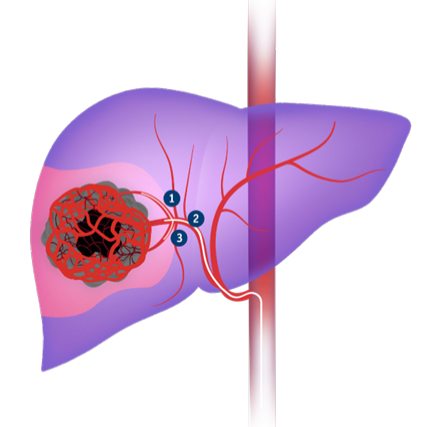
Selective delivery

  • Complex catheterization
  • Simple dosimetry (dose to perfused volume)
  • Minimises normal tissue exposure
TheraSphereTM’s delivery allows for selective administration, offering simple dosimetry and minimizing normal tissue exposure

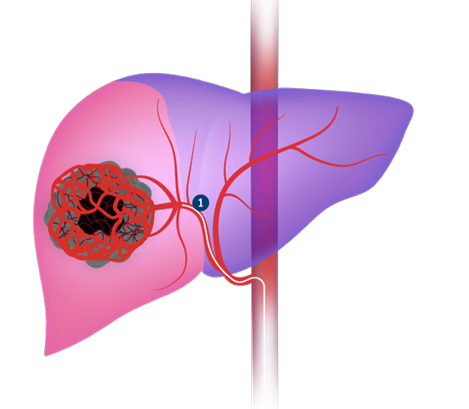
Lobar delivery

  • Simple catheterization
  • Complex dosimetry (dose to tumour/normal)
  • Increases normal tissue exposure
TheraSphereTM’s delivery allows for lobar administration, offering simple catheterization

By optimising the distribution of microspheres and carefully monitoring dose, TheraSphereTM Y-90 Therapy achieves the precision needed to treat even the largest and most complex tumours.


TheraSphere RPM helps maximise tumor dose, optimise dose distribution and minimise impact on healthy liver tissue.

Maximise Tumour Absorbed Dose

TheraSphere RPM helps maximise tumor dose, optimise dose distribution and minimise impact on healthy liver tissue.

Optimise Dose Distribution

TheraSphere RPM helps maximise tumor dose, optimise dose distribution and minimise impact on healthy liver tissue.

Minimise Impact To Healthy Tissue

Maximising outcomes: How higher dose drives better results

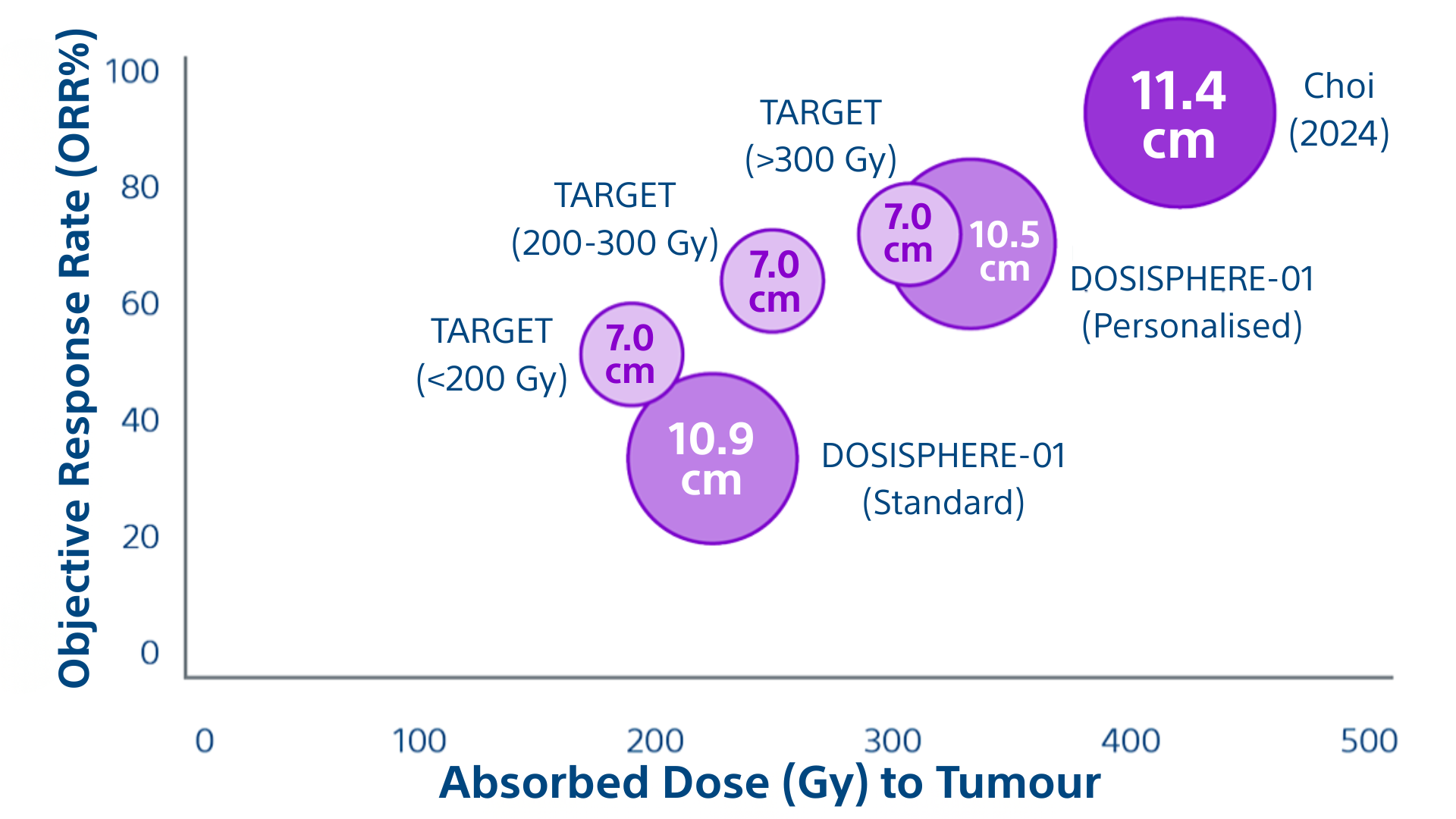
The clinical evidence of TheraSphere™ Y-90 Therapy is clear and well-established: dose matters, delivering a higher absorbed radiation dose to the tumour correlates directly with improved objective response rates (ORR) in large HCC tumours. 6-7-8

Absorbed Dose-Response Relationship with TheraSphereTM

Absorbed dose–response relationship with TheraSphere: higher tumour dose yields higher ORR in large HCC trials.

Extensive clinical evidence such as TARGET and DOSISPHERE-01, as well as recent findings by Choi et al., demonstrate that personalised dosimetry and higher tumour-absorbed doses (exceeding 300 Gy) can double objective response rates (ORR) compared with standard dosimetry. This correlation remains consistent even in large HCC tumours (> 5 cm), where optimising radiation delivery significantly increases the likelihood of tumour shrinkage and enhances overall patient outcomes.6-7-8


DOSISPHERE-01 (2021)
 StandardPersonalised
Tumour Size (cm)10.9 cm10.5 cm
Dose to Tumour (Gy)221 Gy331 Gy
ORR (%)35.7%71.4%
arrow
 TARGET (2022)
<200 Gy200-300 Gy>300 Gy
7.0 cm7.0 cm7.0 cm
<200 Gy200-300 Gy>300 Gy
52.8%64.9%72.1%
arrow

This evidence underscores the critical importance of optimising dosimetry to maximise tumour dose while preserving healthy tissue, as higher absorbed doses directly translate into demonstrably greater therapeutic efficacy.


1.Estimates shown are based on geometric calculations and averagecell size; actual tumor cell counts may vary.  Wee JJ, Tee CL,Junnarkar SP, et al. Outcomes of surgical resection of super-giant (≥15cm) hepatocellular carcinoma: Volume does matter, if not the size. JClin Transl Res. 2022;8(3):209-217. Published 2022 May 25.

2.Arzumanian VA, Kiseleva OI, Poverennaya EV. The Curious Case of theHepG2 Cell Line: 40 Years of Expertise. Int J Mol Sci.2021;22(23):13135. Published 2021 Dec 4.doi:10.3390/ijms222313135​

3.Pellerin O, Lin M, Bhagat N, et al. Can C-arm cone-beam CT detect a micro-embolic effect after TheraSphere radioembolization of neuroendocrine and carcinoid liver metastasis? Cancer Biother Radiopharm. 2013;28(6):459–65.

4.Atassi B, Bangash AK, Bahrani A, et al. Multimodality imaging following 90Y radioembolization: A comprehensive review and pictorial essay. Radiographics. 2008;28(1):81–99.

5.Young S., Chen T, Flanagan S, et al. Realized tumor to normal ratios in hepatocellular carcinoma patients undergoing transarterial radioembolization: A retrospective evaluation. Eur Radiol. 2022;32:4160-7.

6.Garin E, Tselikas L, Guiu B, Chalaye J et al. Personalised versus standard dosimetry approach of selective internal radiation therapy in patients with locally advanced hepatocellular carcinoma (DOSISPHERE-01): a randomised, multicentre, open-label phase 2 trial. Lancet Gastroenterol Hepatol 2020; Published Online: November 06, 2020 https://doi.org/10.1016/S2468-1253(20)30290-9

7.Lam, M., Garin, E., Maccauro, M. et al. A global evaluation of advanced dosimetry in transarterial radioembolization of hepatocellular carcinoma with Yttrium-90: the TARGET study. Eur J Nucl Med Mol Imaging (2022). https://doi.org/10.1007/s00259-022-05774-0.

8.Choi JW, Suh M, Paeng JC, Kim JH, Kim HC. Radiation Major Hepatectomy Using Ablative Dose Yttrium-90 Radioembolization in Patients with Hepatocellular Carcinoma 5 cm or Larger. J Vasc Interv Radiol. 2024 Feb;35(2):203-212. 

Caution:
The law restricts these devices to sale by or on the order of a physician. Indications, contraindications, warnings, and instructions for use can be found in the product labelling supplied with each device or at www.IFU-BSCI.com. Products shown for INFORMATION purposes only and may not be approved or for sale in certain countries. This material not intended for use in France.