









Endoscopic Weight-Loss Options
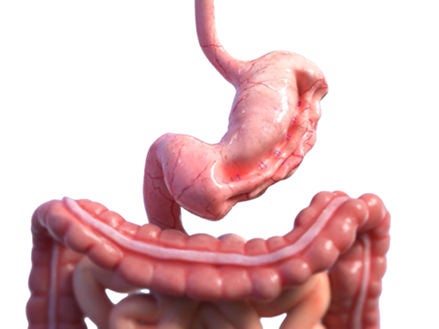
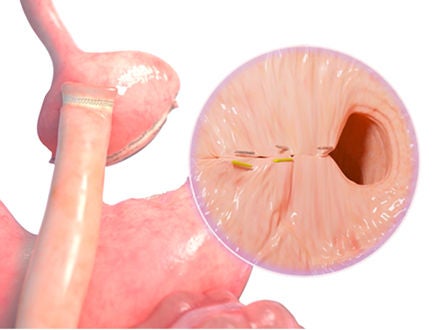
As obesity management continues to evolve, endoscopic bariatric procedures are expanding weight-loss treatment options within the care continuum. Endoscopic Sleeve Gastroplasty (ESG) and Transoral Outlet Reduction (TORe) are safe, minimally invasive procedures offering proven, effective weight-loss results for appropriate patients.1,2
See our Find a Doctor tool to locate healthcare professionals who perform these procedures for patient referral.
When to Consider Bariatric Endoscopy
Despite advances in obesity treatment, many patients remain without a durable intervention. Some decline bariatric surgery, while others discontinue GLP-1 therapies due to poor tolerance and other barriers to long-term treatment, creating a need for additional options.6
Up to 99%
of patients will never receive a weight-loss procedure7
77%
of eligible patients decline bariatric surgery8
>70%
discontinue GLP-1 therapy within 24 months6
Patients may refuse surgery for many reasons, including concerns about invasiveness and the permanence of anatomical changes.8-10
Endobariatric procedures such as ESG and TORe provide anatomy-preserving options for patients who may not pursue surgery, are not surgical candidates, or require an alternative after discontinuing medication.
Why patients choose bariatric endoscopy
Evidence suggests that patients value characteristics that distinguish bariatric endoscopy from surgery, making it an acceptable option for many people who would otherwise remain untreated.11
Preference studies show:
67.2%
of patients preferring bariatric endoscopy described themselves as 'unlikely' or 'extremely unlikely' to undergo surgery11*
95.1%
cited 'no external scars' as an advantage to bariatric endoscopy11*
73.8%
valued that bariatric endoscopy can be converted to surgery if needed11*
*All percentages refer to the subgroup of 61 patients eligible for bariatric surgery.
What is the Evidence Supporting ESG?
ESG has been evaluated in randomised trials and real-world clinical settings, demonstrating clinically meaningful weight loss, metabolic improvements, and a favourable safety profile.1,7,12
Weight Loss and Metabolic Outcomes with ESG
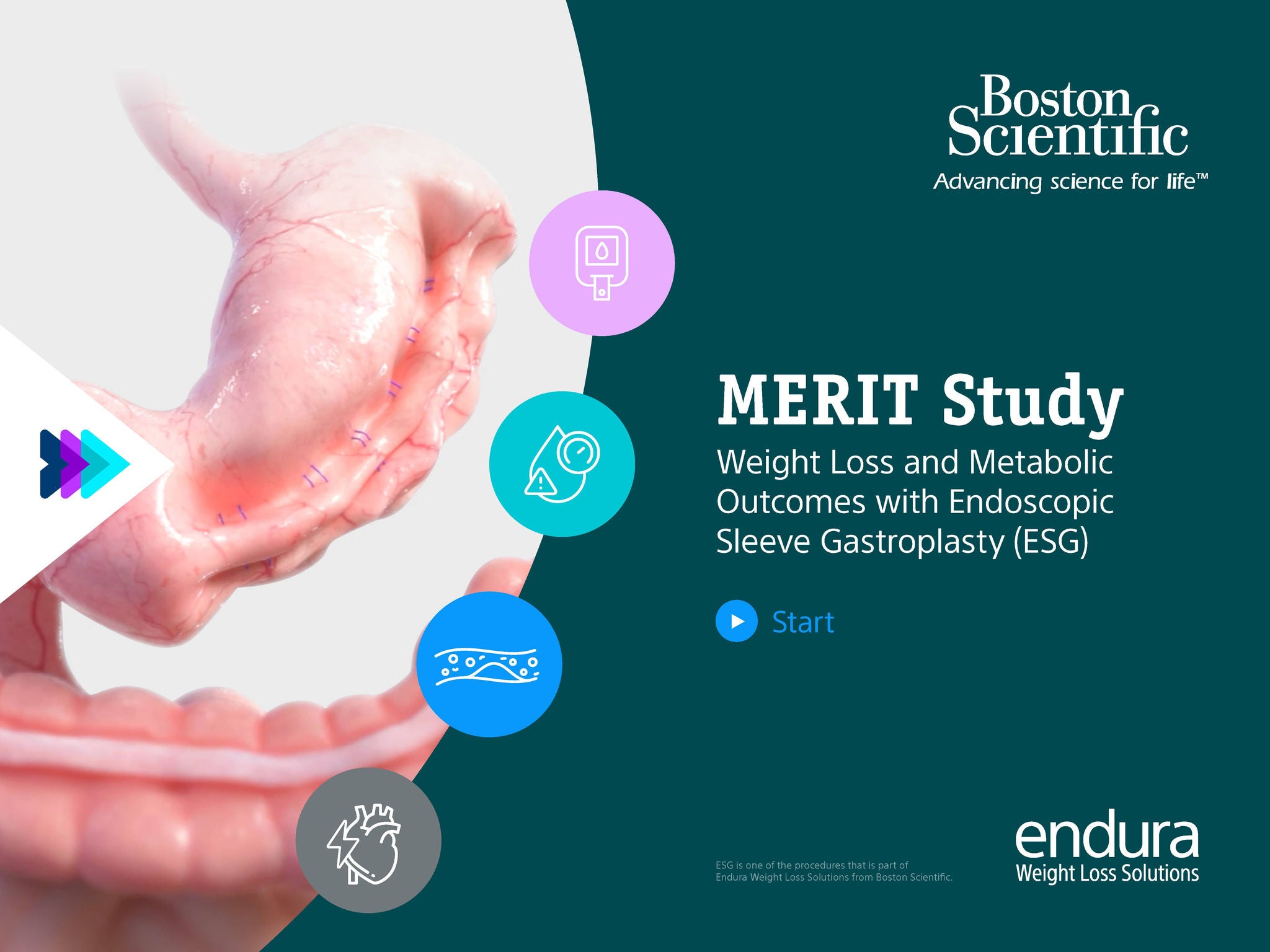
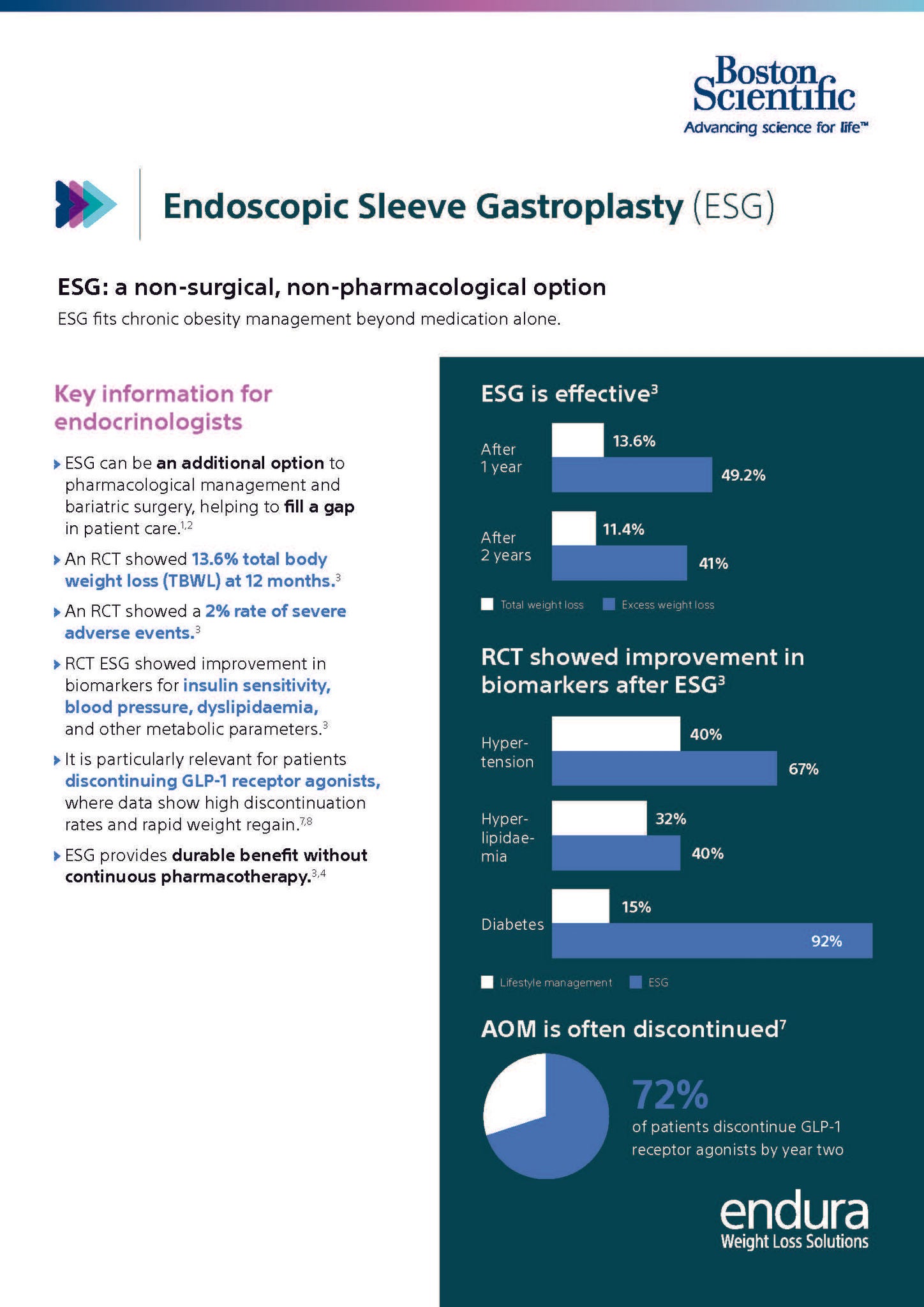
The MERIT trial, a randomised, multicentre study of 209 patients, provides a strong evidence base for ESG, demonstrating not just weight loss but measurable improvement across three key comorbidities: type 2 diabetes, hypertension, and metabolic syndrome.1
13.6%
mean total body weight loss with ESG (vs. 0.8% with lifestyle modification alone)1
80%
of ESG patients improved in at least one weight-related comorbidity (vs. 45%)1
2%
serious adverse event rate, with no mortality1
Resources for referrers
Efficacy and Safety of ESG and TORe
Clinical trials, long-term follow-up studies, and real-world evidence support the efficacy and safety of ESG and TORe for appropriate patients. The summaries below highlight key outcomes from the current evidence base.
Endoscopic Sleeve Gastroplasty (ESG)
How much weight loss does ESG achieve?
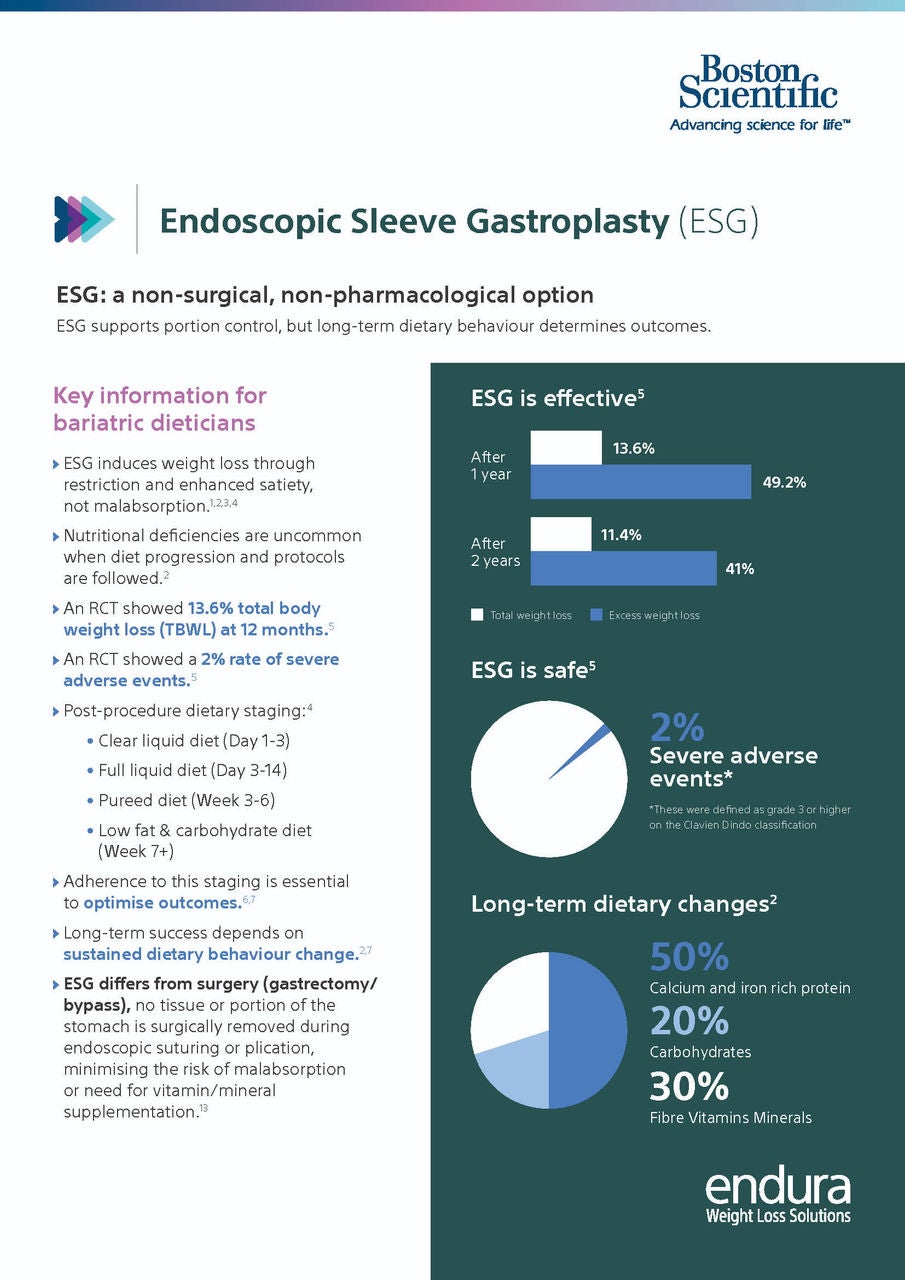
ESG delivers clinically meaningful weight loss across both controlled trials and real-world practice.1,7,10 In the randomised MERIT trial, patients achieved a mean total body weight loss (TBWL) of 13.6% at 12 months,1 while larger prospective cohorts reported up to 21.2% TBWL at the same timepoint.12 A pooled IFSO meta-analysis also demonstrated consistent efficacy across heterogeneous clinical settings, with a mean TBWL of 17.56%.7
What’s the safety profile of ESG?
The MERIT RCT reported a 2% serious adverse event (SAE) rate with no mortality.1 Findings from a larger pooled IFSO meta-analysis showed an even lower SAE rate of 1.25%,7 reinforcing the favourable safety profile of ESG across a broader patient population.
Transoral Outlet Reduction (TORe)
How effective is TORe for weight regain after gastric bypass?
TORe delivers durable weight loss for patients experiencing weight regain after gastric bypass, with a mean TBWL of 8.5% at 12 months.2 Longer-term data also demonstrate outcomes comparable to surgical revision at 1, 3, and 5 years.5
How does the safety of TORe compare with surgical revision?
Long-term follow-up supports the favourable safety profile of TORe, with no severe adverse events, no mortality, and an overall serious adverse event (SAE) rate of 3.9% reported over five years.2 In a matched comparison with surgical revision, TORe also demonstrated no severe adverse events versus 19.4% for surgery, while achieving comparable long-term weight loss.5
ESG and TORe: clinical evidence summary
| Procedure | Patient population | Key efficacy and safety outcomes |
| ESG | Primary endoscopic weight loss for patients seeking a non-surgical option | 13.6% mean TBWL at 12 months in MERIT RCT;1 up to 21.2% TBWL in prospective cohorts;12 17.56% mean TBWL in IFSO meta-analysis7 SAE rates: 2% in MERIT and 1.25% in IFSO meta-analysis, with no mortality1,7 |
| TORe | Weight regain after gastric bypass | 8.5% mean TBWL at 12 months;2 outcomes comparable to surgical revision at 1, 3, and 5 years5 Five-year SAE rate: 3.9%, with no severe adverse events or mortality2 |