











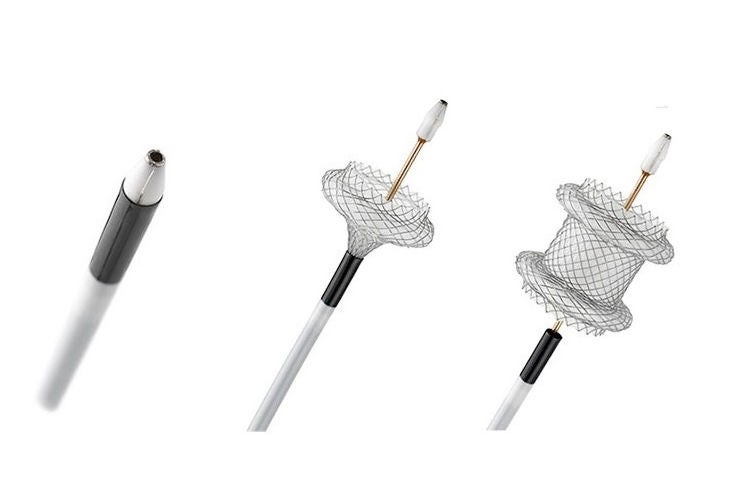
The Hot AXIOS™ Stent and Electrocautery Enhanced Delivery System enables therapeutic endoscopists to access a symptomatic pancreatic pseudocyst, walled-off necrosis, gallbladder or bile duct via a transgastric or transduodenal approach to place the stent.
The system combines a cautery-enabled access catheter with the therapeutic Hot AXIOS™ Stent for a streamlined, exchange-free procedure.
The Hot AXIOS™ System is used under combined endoscopic and EUS guidance. Its electrocautery-enhanced delivery system is designed to facilitate smooth, efficient access into the target structure.
Over 400 endoscopists across Europe are already performing drainage procedures with LAMS for PFC/WON and have the ability to offer this novel procedure to non-surgical patients with acute cholecystitis who would previously have had to receive a percutaneous drain.1
Hot AXIOS Indications
Designed for precision and efficiency, the Hot AXIOS ™ Stent and Electrocautery-Enhanced Delivery System is transforming the landscape of minimally invasive procedures, offering unparalleled solutions for complex drainage needs.
The Hot AXIOS™ System is indicated for use to facilitate transgastric or transduodenal endoscopic drainage of:
- Gallbladder in patients with acute cholecystitis who are at high risk or unsuitable for surgery.
- A pancreatic pseudocyst or a walled-off necrosis with ≥ 70% fluid content.
- The bile duct after failed ERCP in patients with biliary obstruction due to a malignant stricture.
EUS Therapeutic offerings
Boston Scientific's EUS Therapeutic Solutions are making significant progress in addressing a broader range of complex diseases. The Hot AXIOS™ System allows it to support innovative treatment approaches across various gastrointestinal conditions that require precise and effective drainage solutions.
Hot AXIOS' adaptability in managing complex fluid collections and obstructions showcases its potential to transform therapeutic strategies across multiple clinical scenarios.
Explore our innovative therapies that bring new possibilities to patient care: