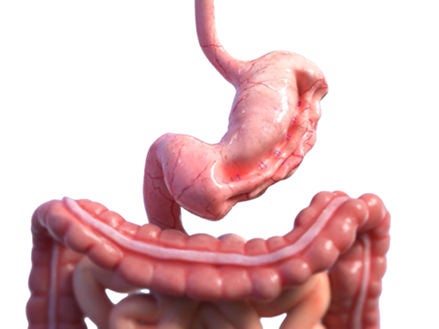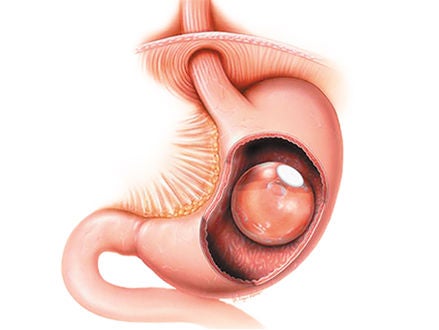










Introducing Transoral Outlet Reduction (TORe)
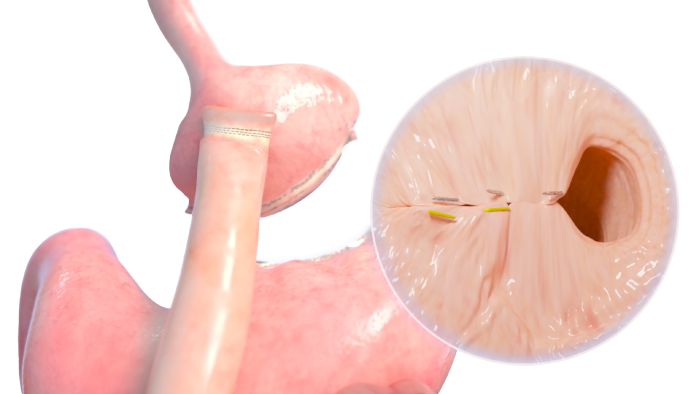


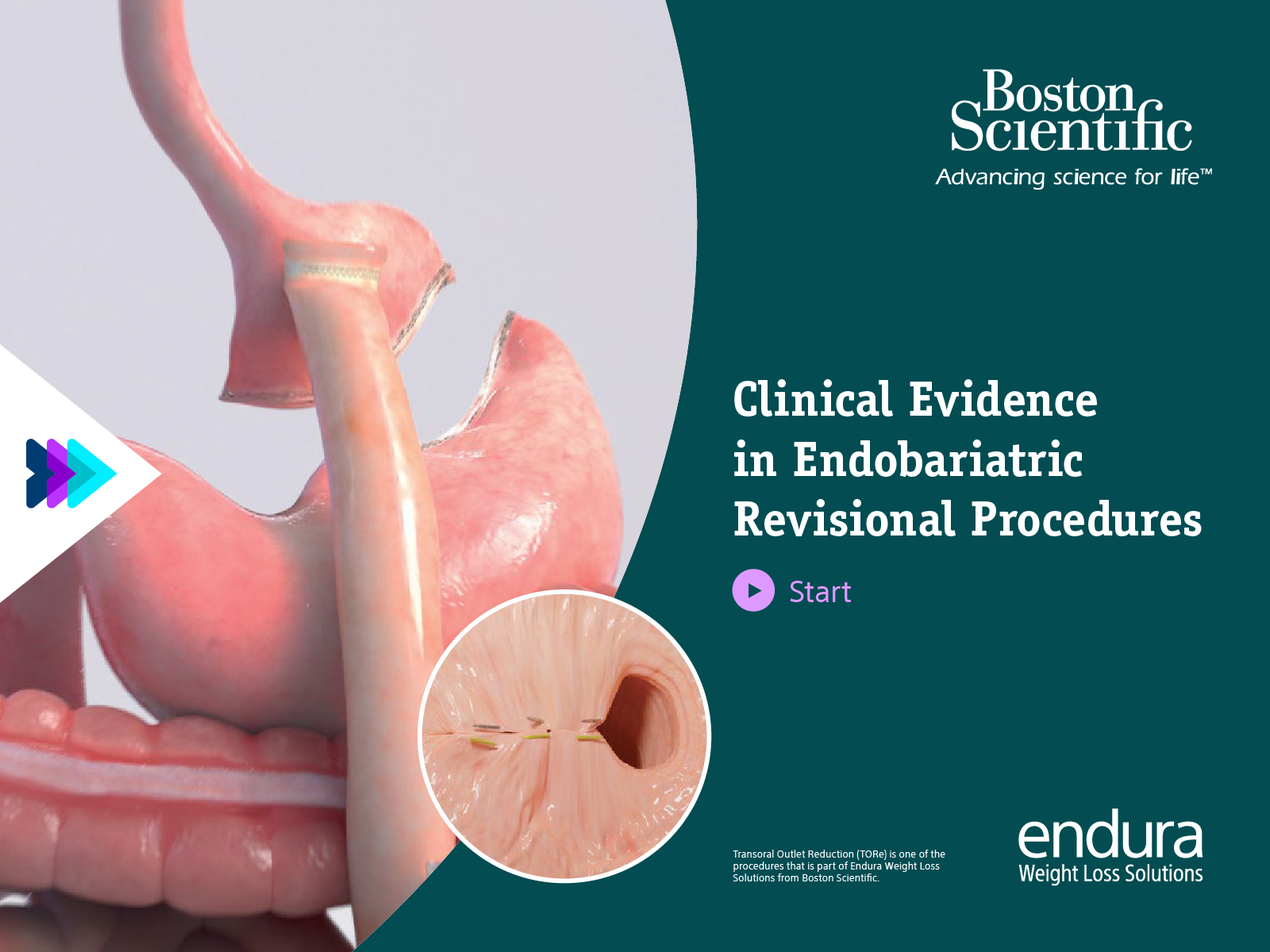
Transoral Outlet Reduction (TORe) is a minimally invasive endoscopic revisional bariatric procedure designed for patients who have regained weight after gastric bypass. By tightening the connection between the stomach and small intestine, TORe helps restore portion control and supports long-term weight loss.



How the TORe Procedure is Performed
TORe is performed under general anaesthesia by a trained gastroenterologist or surgeon, using the OverStitch NXT™ Endoscopic Suturing System. The procedure involves a flexible scope inserted through the mouth, avoiding incisions and minimising downtime. It safely restores the stomach’s restrictive function to help patients lose weight again, with most patients typically discharged the same day.
TORe Procedure Overview
| Attribute | Description |
| Procedure type | Endoscopic revisional bariatric procedure |
| Indication | Weight regain after Roux-en-Y gastric bypass |
| Access route | Transoral |
| Mechanism | Reduction of gastrojejunal outlet diameter using endoscopic suturing |
TORe: Step by Step
1. A flexible endoscope is introduced transorally through the mouth
2. The gastrojejunal anastomosis is identified
3. The OverStitch NXT™ Endoscopic Suturing System is used to place endoscopic sutures to reduce outlet diameter
4. The reduced outlet restores restriction and supports weight loss
Curious to learn more about the TORe procedure? Here’s how it works:
Clinical Evidence
6%
Proven Weight-Loss Results
In a large meta-analysis, patients who underwent TORe saw an average of 6% total body weight loss at 12 months.⁴
9-12%
Latest Technique
Latest studies using the purse-string approach report 9-12% TBWL at 12 months.5,6
5&7 y
Support Long-Term Outcomes
Long-term studies support durable weight loss at 5 and 7 years.5,7
| Outcome | Result | Reference |
| TBWL at 12 months (meta-analysis) | 6% | Jaruvongvanich V, Vantanasiri K, Laoveeravat P, et al. Endoscopic full-thickness suturing plus argon plasma mucosal coagulation versus argon plasma mucosal coagulation alone for weight regain after gastric bypass: a systematic review and metaanalysis. Gastrointest Endosc.2020;92(6):1164-75.e6.4 |
| TBWL at 12 months (purse-string) | 9-12% | Jirapinyo P, Kumar N, AlSamman MA, Thompson CC. Five-year outcomes of transoral outlet reduction for the treatment of weight regain after Roux-en-Y gastric bypass. Gastrointest Endosc. 2020;91(5):1067-73.5 Meyers MH, Swei EC, Tarter W, et al. Factors Associated with Weight Loss After Endoscopic Transoral Outlet Reduction (TORe). J Gastrointest Surg. 2023;27(8):1587-93.6 |
| Long-term durability | Supported at 5 and 7 years | Jirapinyo P, Kumar N, AlSamman MA, Thompson CC. Five-year outcomes of transoral outlet reduction for the treatment of weight regain after Roux-en-Y gastric bypass. Gastrointest Endosc. 2020;91(5):1067-73.5 Jirapinyo, et al. Seven-year Outcomes of Transoral Outlet Reduction for the Treatment of Weight Regain After Roux-en-Y Gastric Bypass. Gastrointestinal Endoscopy. 2020. Subset of patients included in study are also represented in 5-year data.7* |
| Adverse events vs surgical revision | 6.5% vs 29.0% (p=0.04) | Dolan RD, Jirapinyo P, Thompson CC. Endoscopic versus surgical gastrojejunal revision for weight regain in Roux-en-Y gastric bypass patients: 5-year safety and efficacy comparison. Gastrointest Endosc.2021;94(5):945-950.3 |
*Subset of patients included in study are also represented in 5-year data
A comparative study demonstrated a lower rate of adverse events with TORe compared to surgical revisions, whilst achieving similar outcomes in long-term efficacy.3
| Outcome | TORe n=31 | LAP n=31 | p-value | |
| Effectiveness at 5 years | 11.5% TBWL | 13.1% TBWL | 0.67 | |
| Adverse events | 6.5% | 29.0% | 0.04 | |
| Safety profile | 0% SAE* rate | 19.4% SAE rate | 0.024 | |
*Values are n (%). Adverse event rate comparison between endoscopic and surgical gastrojejunal anastomosis revision. Serious adverse events were determined in reference to the American Society for Gastrointestinal Endoscopy lexicon for reporting endoscopic adverse events and the National Surgical Quality Improvement Program. Early events defined as those occurring within 30 days of revision.
Dolan, et al; Gastrointestinal Endoscopy. 2021
- Matched cohort population
- Multicentric
- Long follow-up studies: 5yrs
Key Resources
Resources for Patients
Discover comprehensive resources tailored for TORe patients across the UK, Italy, Germany, Spain, and France.
Patient Perspective: Alessia‘s TORe Journey
Listen to Alessia’s story as she shares her TORe journey.