





AGENT™
Paclitaxel Coated Balloon Catheter


The AGENT IDE 3 years follow up Clinical Data showed statistically lower rates of TLF in patients that received AGENT DCB versus Balloon Angioplasty.1


Explore
AGENT IDE Clinical Trial
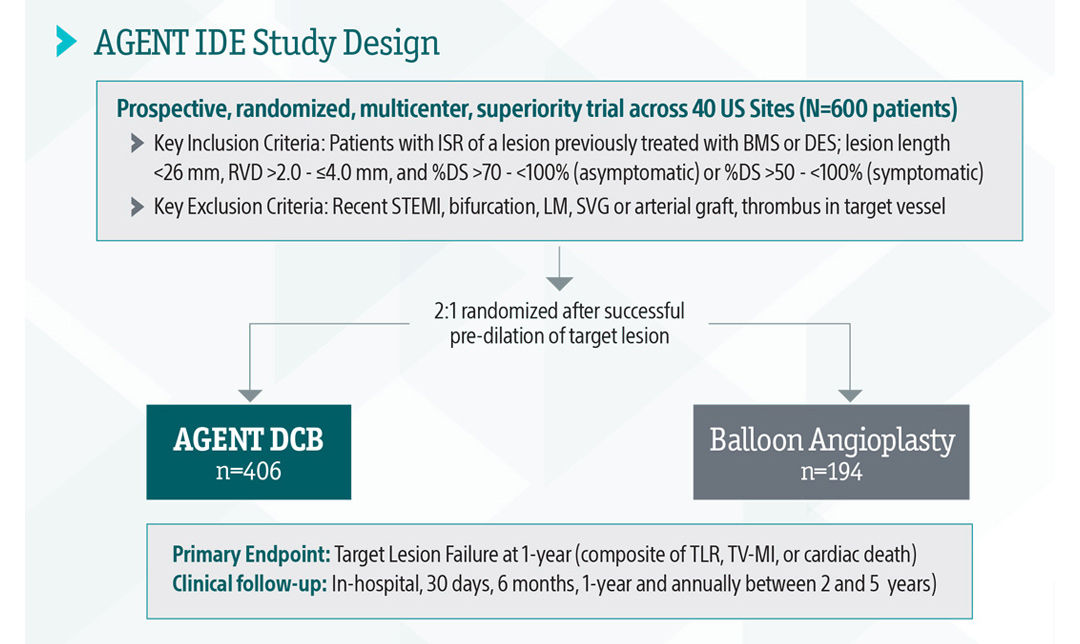
Primary Endpoints at 1 year, 2 years & 3 years
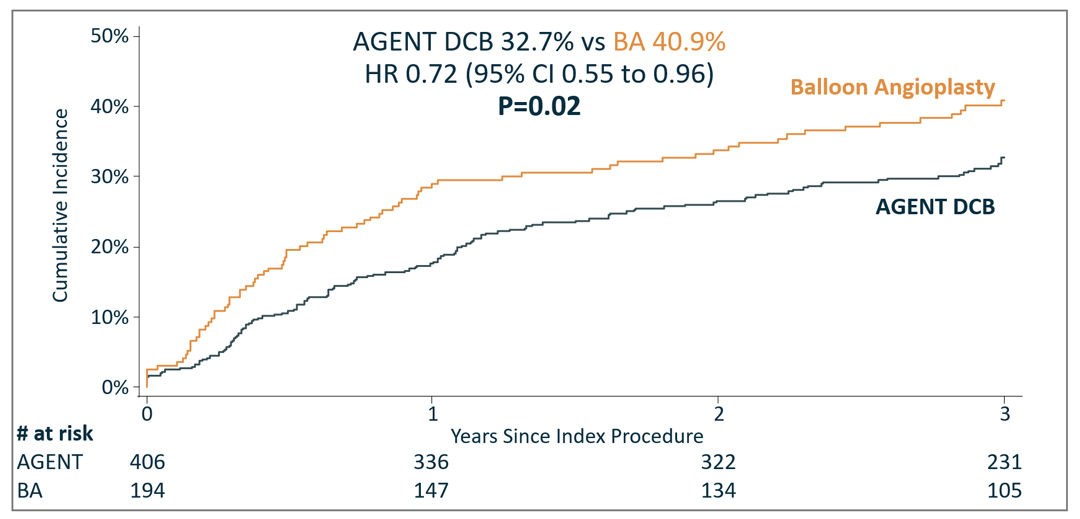
Primary Endpoint Met at 1-Year²

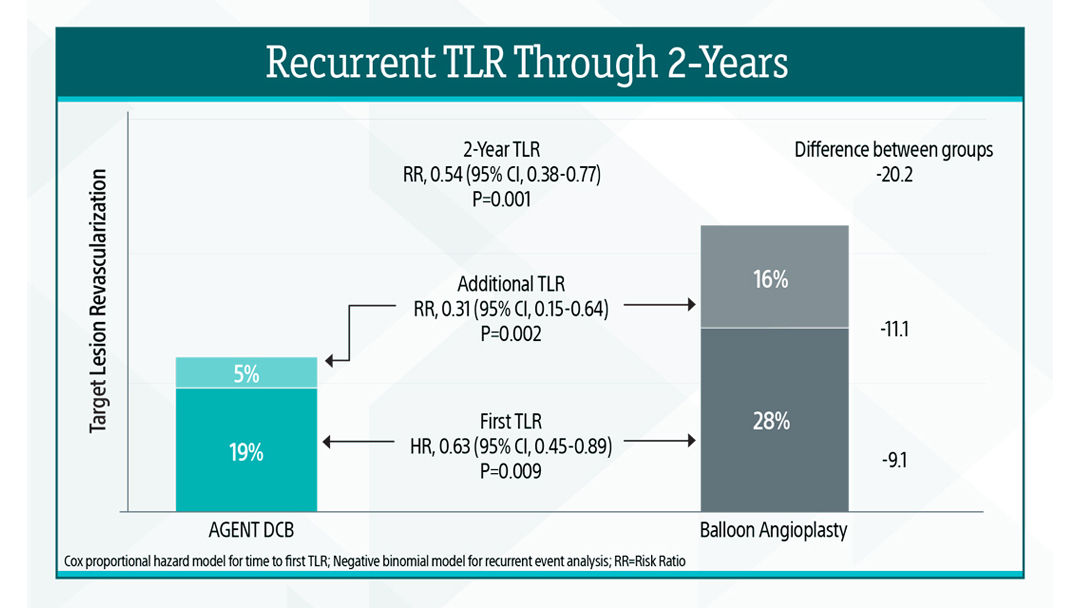
2-Year Data Highlights³
Statistically lower rates of TLF in patients that received AGENT DCB versus Balloon Angioplasty: 27% reduction in the rate of TLF (P=0.04)
These differences were driven by:
- 37% reduction in the rate of first TLR after treatment with AGENT versus BA (P=0.009)
- 69% reduction in the rate of subsequent TLRs (P=0.002)
No definite/probable thromboses in the AGENT DCB arm versus BA (0% vs. 3%, P=0.0004)
3-Year Data Highlights⁴
- AGENT IDE is the first RCT conducted in the US examining the efficacy and safety of DCB in patients with coronary ISR
- AGENT DCB was superior to conventional balloon angioplasty for the primary endpoint of TLF at 1-year
- Consistent results were observed through 3 years of follow-up after treatment with AGENT DCB compared with BA:
- 28% reduction in TLF, with 35% reduction in first TLR and 42% reduction in first TV-MI
- Recurrent TLR analysis: More repeat events per patient with BA, including multiple TLRs
- One definite/probable ST with AGENT vs 7 in the BA arm (0.3% vs. 3.8%; P=0.001)
- These data support the use of AGENT DCB for the treatment of coronary ISR
| The patient population was complex, with 51% diabetics and 43% having multiple layers of stent. |
| AGENT DCB delivers a targeted therapeutic dose of paclitaxel to minimize restenosis without introducing an extra layer of metal. |