Boston Scientific accounts are for healthcare professionals only.

¿Qué son?
¿Qué son los miomas uterinos?
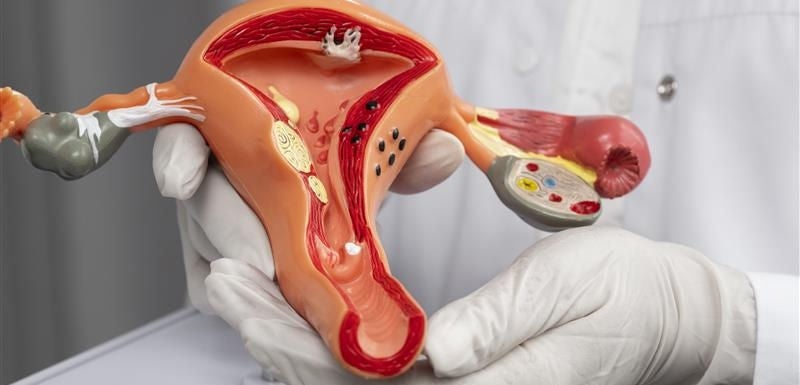
Los miomas uterinos son tumores benignos que se desarrollan a partir del tejido muscular del útero, conocidos también como leiomiomas o fibromas1 . Son una de las afecciones ginecológicas más frecuentes en mujeres en edad fértil2 .
Muchas veces no causan síntomas, pero en otros casos pueden producir sangrado menstrual abundante o prolongado, presión o dolor pélvico, dificultad para concebir, así como molestias urinarias o digestivas, dependiendo del tamaño, la ubicación o el número de los miomas 3,4.
Tratamientos
Posibles tratamientos para los miomas uterinos


Conoce tus opciones de tratamiento
Los miomas uterinos pueden tratarse de distintas formas. Un ginecólogo especializado puede orientarte sobre alternativas como medicamentos, cirugía o técnicas mínimamente invasivas como la embolización.
This material is for informational Purposes only and not meant for medical diagnosis. This information does not constitute medical or legal advice, and Boston Scientific makes no representation regarding the medical benefits included in this information. Boston Scientific strongly recommends that you consult with your physician on all matters pertaining to your health.
Este material tiene fines exclusivamente informativos y no está destinado a proporcionar un diagnóstico médico. Esta información no constituye asesoría médica ni legal, y Boston Scientific no realiza ninguna representación respecto a beneficios médicos asociados al contenido aquí presentado. Boston Scientific recomienda enfáticamente consultar con su médico tratante sobre cualquier aspecto relacionado con su salud.
Referencias:
1. National Institutes of Health. (2021). Uterine Fibroids (Leiomyomas). MedlinePlus. https://medlineplus.gov/uterinefibroids.html
2. American College of Obstetricians and Gynecologists. (2021). Practice Bulletin No. 228: Management of Symptomatic Uterine Leiomyomas. Obstetrics & Gynecology, 137(6), e100–e115. https://doi.org/10.1097/AOG.0000000000004390
3. American College of Obstetricians and Gynecologists. (2021). ACOG Practice Bulletin No. 228: Management of Symptomatic Uterine Leiomyomas. Obstetrics & Gynecology, 137(6), e100–e115.
4. Mayo Clinic. (2023). Uterine fibroids - Symptoms & causes. Recuperado de https://www.mayoclinic.org/diseases-conditions/uterine-fibroids/symptoms-causes
5. National Library of Medicine (NIH). (2022). Miomas uterinos. MedlinePlus. Recuperado de https://medlineplus.gov/spanish/uterinefibroids.html
6. National Institute for Health and Care Excellence (NICE). (2021). Heavy Menstrual Bleeding: Assessment and Management (NG88). NICE Guidelines. https://www.nice.org.uk/guidance/ng88
7. American College of Obstetricians and Gynecologists (ACOG). (2021). Practice Bulletin No. 228: Management of Symptomatic Uterine Leiomyomas. Obstetrics & Gynecology, 137(6), e100–e115. https://doi.org/10.1097/AOG.0000000000004390
8. National Library of Medicine (NIH). (2022). Embolización de fibromas uterinos. MedlinePlus. Recuperado de https://medlineplus.gov/spanish/ency/article/007382.htm
9. National Institutes of Health. (2022). Uterine Fibroid Embolization. MedlinePlus. https://medlineplus.gov/ency/patientinstructions/000738.htm
10. American College of Obstetricians and Gynecologists (ACOG). (2021). Practice Bulletin No. 228: Management of Symptomatic Uterine Leiomyomas. Obstetrics & Gynecology, 137(6), e100–e115. https://doi.org/10.1097/AOG.0000000000004390
11. American College of Obstetricians and Gynecologists (ACOG). (2021). Practice Bulletin No. 228: Management of Symptomatic Uterine Leiomyomas. Obstetrics & Gynecology, 137(6), e100–e115. https://doi.org/10.1097/AOG.0000000000004390
12. National Institute for Health and Care Excellence (NICE). (2021). Heavy Menstrual Bleeding: Assessment and Management (NG88). https://www.nice.org.uk/guidance/ng88
13. Stewart, E. A., Cookson, C. L., Gandolfo, R. A., & Schulze-Rath, R. (2017). Epidemiology of uterine fibroids: A systematic review. BJOG: An International Journal of Obstetrics & Gynaecology, 124(10), 1501–1512. https://doi.org/10.1111/1471-0528.14640